
sea
Blog de Paleoantropología
|
Mis ocasionales divagaciones sobre paleoantropología, creacionismo y temas relacionados. En este sitio, trato de ser lo más objetivo posible, pero aquí es donde expreso mis opiniones. Sigue este enlace si deseas enviarme comentarios. |
Temas: Genomas Denisovanos y Neandertales, Australopithecus sediba, Esqueleto de Dmanisi, El Hobbit en el Día de Darwin, Broma de abril otra vez, Más fósiles de Flores, Desafíos de blog, De Simio a Hombre, En la Conferencia Mega, Pigmeos en Flores, Creacionistas y Dmanisi, April National Geographic, ¡Broma de abril!, Un Aborigen como Neandertal, Últimos desarrollos sobre el Hobbit, La estafa del «Neandertal», Homo floresiensis en el Día de Darwin, El debate del Hobbit, H. floresiensis ¿microcéfalo?, Hoy cumple diez años, Homo floresiensis - el Hobbit, Dembski sobre el Origen del Hombre, otra vez, La Maldición de Adán, Diseño Inteligente en 1710, Fósiles en la Carne, Cráneo de Olorgesailie, Dembski sobre el Origen del Hombre, Reseña de Gish, Museo Australiano, Reseña en Science, Simio Barbado, Agrupación, El Dedo del Panda, Cráneo de Ceprano, Arte Neandertal, Artículo sobre Dmanisi, Artículo de McClellan, Las Siete Hijas de Eva, Paralaje Neandertal, Scientific American, Cráneo Keniano, K. platyops, Shanidar, Caminando con los Hombres de las Cavernas, Desatando la Tormenta, Eugene Dubois, Museo Iraquí, OH 65
31 de mayo de 2011: Genomas de los denisovanos y neandertales
Last year the first draft genome for Neandertal nuclear DNA was published. Genetic sequences for mtDNA and nuclear DNA from a finger bone from Denisova in Siberia were also published, showing that the bone had very ancient mtDNA, but belonged to a sister group of the Neandertals. Fascinatingly, it seems that Neandertals made about a 2.5% genetic contribution to all modern non-African humans, and the Denisovan genes made about a 5% contribution to modern Melanesians. Some posts discussing these finds at the Panda's Thumb:Interacción reproductiva entre neandertales y humanos - la respuesta de la Tierra antigua
Un genoma completo de Denisova, Siberia
Denisovanos y el problema de las especies
6 de mayo de 2010: Australopithecus sediba
Last month the discovery of Australopithecus sediba was announced. I'll be updating the site soon to cover that. In the meantime, check out these articles from the El Dedo del Panda:Australopithecus sediba y la respuesta creacionista
Creacionista vs. creacionista sobre Homo habilis
2 de enero de 2009: El esqueleto de Dmanisi
In 2007, the discovery of huesos fosilizados del cuerpo (as opposed to the head) of the Dmanisi hominids was announced. These bones show that the Dmanisi hominids were bipedal, but with some primitive characteristics particularly in the upper body. The bones are definitely not those of apes, but they are not quite like those of modern humans either. At the Panda's Thumb, I have responded to articles about these fossils by Casey Luskin del Instituto de Descubrimiento, and Respuestas en Génesis. These creationist responses are particularly hilarious because they contradict one another: Luskin thinks that the bones are from apes, while AIG thinks they belong to humans. Una vez más, creationists confirm that they can't tell the difference between apes and humans even as they assure us that all the fossils are either ape or human.20 de junio de 2007: El Hobbit en el Día de Darwin
 A few months ago I attended a talk by Professor Colin Groves of the Australian National University: 'An update on Homo floresiensis, a.k.a. the "Hobbit"'. As is well known, there has been an unusually bitter scientific debate over the last couple of years as to whether el hobbit is indeed a new species, or just a small microcephalic human. The term 'microcephaly' covers a range of conditions which cause unusually small brain sizes. (Disclaimer: Groves is not a disinterested participant in this debate, having coauthored a paper which argues against the microcephalic interpretation.) Groves went over a long list of unusual features of the hobbit. The limb bone ratios are unlike those of any apes or humans. They are also very robust: in spite of their small size, hobbits would have been remarkably strong. The arms are too long for humans, and they had unusually large feet (like Tolkien's hobbits!). The lower jaw lacks a chin, a feature found in all humans (even people who look chinless), and that is also true of a second jaw which has been found. The upper end of the humerus has a twist not found in modern humans, but which was then found in the Turkana Boy Homo erectus skeleton once it was looked for. Groves' conclusion: all of these features make it overwhelmingly unlikely that the hobbit was just a small microcephalic human. (You can find Groves' talk on YouTube, in seven installments:
1,
2,
3,
4,
5,
6,
7)
A few months ago I attended a talk by Professor Colin Groves of the Australian National University: 'An update on Homo floresiensis, a.k.a. the "Hobbit"'. As is well known, there has been an unusually bitter scientific debate over the last couple of years as to whether el hobbit is indeed a new species, or just a small microcephalic human. The term 'microcephaly' covers a range of conditions which cause unusually small brain sizes. (Disclaimer: Groves is not a disinterested participant in this debate, having coauthored a paper which argues against the microcephalic interpretation.) Groves went over a long list of unusual features of the hobbit. The limb bone ratios are unlike those of any apes or humans. They are also very robust: in spite of their small size, hobbits would have been remarkably strong. The arms are too long for humans, and they had unusually large feet (like Tolkien's hobbits!). The lower jaw lacks a chin, a feature found in all humans (even people who look chinless), and that is also true of a second jaw which has been found. The upper end of the humerus has a twist not found in modern humans, but which was then found in the Turkana Boy Homo erectus skeleton once it was looked for. Groves' conclusion: all of these features make it overwhelmingly unlikely that the hobbit was just a small microcephalic human. (You can find Groves' talk on YouTube, in seven installments:
1,
2,
3,
4,
5,
6,
7)
Después de la charla, pregunté a Groves si la comunidad científica estaba llegando a algún consenso sobre el hobbit. La respuesta fue inequívoca: aunque el debate es muy acalorado, la interpretación microcéfala solo es apoyada por un pequeño número de científicos; es rechazada por una abrumadora mayoría. En una conferencia reciente, Colin pudo hablar con un número de paleoantropólogos prominentes. Todos estaban seguros de que el hobbit es una nueva especie. Y, durante una de las charlas, cuando se hizo referencia a la interpretación microcéfala, una oleada de risa recorrió a la audiencia. El creacionista Marvin Lubenow, en un nuevo artículo "Los hobbits" eran humanos verdaderos!, afirma que
A diferencia de la afirmación de los descubridores de que estos fósiles representan una nueva especie humana, una segunda teoría que gana popularidad es que estos fósiles no representan una nueva especie humana, sino en cambio enanos o pigmeos que posiblemente sufrían de microcefalia, con cuerpos y cerebros anormalmente pequeños.but this would appear to be wishful thinking. The microcephaly supporters may be making a lot of noise, but not many converts.
Por cierto, Mike Morwood, uno de los descubridores del hobbit, estuvo presente en la charla y lo conocí muy brevemente. Acababa de coautorizar un nuevo libro, The Discovery of the Hobbit, disponible en Australia. Ahora ha sido publicado en tapa dura en Estados Unidos en mayo de 2007 bajo el título A New Human. Es una lectura obligada para cualquiera que quiera saber más sobre uno de los descubrimientos paleoantropológicos más importantes de todos los tiempos.
1 de abril de 2006: ¡Broma de abril!
Lest we forget - the April 1997 issue of Discover magazine had una broma de broma de abril bastante buena about some Neandertal musical instruments that had supposedly been discovered in Germany. It was an unlikely collection, featuring bagpipes, a tuba, a triangle and a 'xylobone', along with a cave painting of marching musicians. In September 2000 el Instituto para la Investigación del Creacionismo cayó en la trampa and featured Marvin Lubenow presenting this evidence in one of their radio programs. I pointed that out on this website about a month later, and the ICR quickly apologized and retracted the claim. However, no erroneous argument ever completely disappears from creationist literature. I later found the April Fool article cited again in un artículo de Brad Harrub on the Answers in Genesis website (the citation has now been silently removed). Harrub also thinks that the Java Man skullcap belongs to a gibbon - even though AIG has admitted that este es un argumento desacreditado that creationists shouldn't use any longer (that claim has now been quietly removed too). Harrub's article was also published in AIG's 'peer-reviewed scientific journal', the Revista Técnica, which goes to show what a joke creationist peer review is.18 de octubre de 2005: Más fósiles de hobbit de Flores
The latest rounds have been fired in the war over the interpretation of the "Hobbit" fossils from Indonesia that stunned the world in 2004. The hobbit discoverers have publicó detalles sobre algunos nuevos fósiles: more arm bones from the original skeleton, another jaw bone, and many pieces from other individuals. According to them, and some other commentators, the new fossils confirm that the hobbit was a typical member of its population, and not an aberrant individual (in fact, some bones come from an individual más pequeño than the first hobbit). However they seem less certain now that the hobbit is descended from Homo erectus. The new bones show some similarities to australopithecines; whether this is due to a genealogical relationship or convergent evolution. In short, it's still a big puzzle. John Hawks has a lengthy analysis of the new fossils on his blog at http://johnhawks.net/weblog/fossils/flores/flores_update_oct_2005.html.Un artículo anterior de Falk et al. argumentó que el cráneo del hobbit no parecía especialmente similar al de los microcéfalos. Un nuevo artículo de Weber et al. en Science afirma, por el contrario, que el hobbit de hecho se parece lo suficiente a los cráneos microcéfalos como para que no se pueda descartar la posibilidad. Sin embargo, Falk et al. permanecen escépticos ante sus afirmaciones. Ann MacLarnon también ha según se dice descubierto un cráneo microcéfalo que se parece al del hobbit.
7 de septiembre de 2005: Retos de blog
Recently I've been on a couple of blogs, challenging creationists to classify some of the more problematical (for them) specimens from the hominid fossil record. You can check out my posts at the El Dedo del Panda, and on Ed Brayton's blog Despachos de las guerras culturales (about halfway down the page).8 de agosto de 2005: De los simios al hombre en el canal History
De Hominino a Homo, the new History Channel documentary, has just aired in the US. Since I don't live there I can't see it, but you can read La reseña de Paul Myers al respecto at Pharyngula. Myers give it a qualified 'OK'; he disliked some things about it, but it was better than he had feared. See also a review by John Hawks aquí.26 de julio de 2005: En la Conferencia Mega
Jason Rosenhouse, while attending the creationist Gran Conferencia, went to listen to speaker Phillip Bell talking about Hombres Simio, Enlaces Perdidos y la Biblia. As he points out, it was the standard creationist boilerplate: Piltdown Man, fully ape or fully human, Lucy, Neanderthal Man, etc. etc. Like all creationists, Bell shied far away from the fossils that would put the lie to the idea that all the hominid fossils are just apes or humans. You'll nunca see a creationist discuss the skulls around that problematic 700cc area, and try to justify on anatomical grounds why some are apes and some are humans. And you certainly won't see photos of those skulls (like you will en este sitio web); wouldn't want to confuse the faithful, after all! (P.S: you can find Phillip Bell's response aquí, and Rosenhouse's reply aquí.)3 de junio de 2005: Pigmeos en Flores
There's una interesante historia en Time about some modern inhabitants of the Indonesian island of Flores who are extremely small and live near the Liang Bua cave where Homo floresiensis was found. Interestingly, they seem to think their ancestors lived in the Liang Bua cave. The scientists who think that the hobbit was merely a microcephalic small modern human are of course greatly heartened by this development, but the scientists who discovered the hobbit are standing firm that it is a new species, and presumably find the presence of nearby pygmies merely coincidental. A quote from one of them: "Of course, there are small-bodied people on Flores, but they don't have brains one-third the size of ours, or unusually shaped pelvises or very long arms like H. floresiensis." This controversy doesn't look like ending any time soon.19 de mayo de 2005: Creacionistas y Dmanisi
I recently got a copy of the new 2nd edition of Marvin Lubenow's book Huesos de Controversia, a creationist book about the evidence for human evolution. I'll do a fuller review of it later, but there's one thing I want to comment on now. In 2002, the discovery of un nuevo cráneo de homínido de Dmanisi, Georgia, was announced. This skull had a very small brain size of 600 cc, in the Homo habilis range. Two other skulls which had been announced in 2000 had brain sizes of 650 cc and 780 cc. The skulls are about 1.8 million years old and had a mixture of features from H. erectus and H. habilis and although the smallest one seemed slightly more primitive, the discoverers saw no reason not to put them all in the same species.Encontré estos cráneos particularmente interesantes porque se sitúan convenientemente en el vacío que los creacionistas suelen alegar separa a los humanos de los primates no humanos. Generalmente, los creacionistas menos competentes (es decir, aquellos que aún piensan que el Hombre de Java y el Hombre de Pekín son cráneos de mono o de simio) tienen una línea divisoria de unos 700 cc; usualmente, cualquier cosa por encima de eso es humana, y cualquier cosa por debajo no lo es. Aunque hay un par de cráneos fragmentarios de habilis estimados en el rango de 650-700 cc, no había ningún cráneo de homínido moderadamente completo entre aproximadamente 620 y 720 cc, por lo que eso se convirtió en el "vacío" que separa a los humanos de los no humanos. Pero ahora tenemos tres cráneos del mismo lugar, del mismo tiempo y de la misma especie, sentados justo encima de ese vacío - por encima, por debajo y dentro de él. ¿Cómo, me pregunté, manejaría Lubenow esto?
Bueno, la respuesta es interesante. El cráneo más grande (780 cc) se lista en la p.350 de BoC en una tabla de fósiles de H. erectus (clasificados por él como humanos). Los dos cráneos más pequeños, de 600 y 650 cc, se listan en la p.352 en una tabla de fósiles de H. habilis (generalmente clasificados por él como no humanos). Así que, por lo que puedo determinar, Lubenow considera que el cráneo más grande es humano y los dos cráneos más pequeños son no humanos. Podrías pensar que esto podría merecer alguna justificación anatómica, pero ninguna se proporciona. De hecho, aparte de esas dos entradas de tabla, Dmanisi no se menciona en el libro de 350 páginas de Lubenow, que debería ser un tratamiento exhaustivo de la evidencia para la evolución humana.
El programa de radio de ICR del 23 de noviembre de 2002 en el que apareció Lubenow fue igualmente elusivo. Hubo una sugerencia de que los cráneos de Dmanisi podrían ser un "malentendido", sin justificación, pero al final ICR y Lubenow no dieron un veredicto sobre los cráneos. Answers in Genesis suele emitir una respuesta a los nuevos fósiles de homínidos anunciados en los medios, pero ellos también han tratado los cráneos de Dmanisi como si no existieran. De hecho, no estoy al tanto de ningún creacionista que los haya abordado frontalmente. Me pregunto por qué podría ser eso?
25 de abril de 2005: National Geographic
The Abril de National Geographic is definitely worth getting if you're interested in hominids. There's an article on the hobbits, Homo floresiensis, and another article about the Hominidos de Dmanisi from Georgia; in particular, a new skull has been discovered there. The new skull is of interest because it is almost entirely toothless, suggesting that the individual must have received considerable support from his companions. This skull was also published on this month (Lordkipanidze et al. 2005, Nature, 434:717).1 de abril de 2005: ¡Broma de abril!
The April 1997 issue of Discover magazine had una broma bastante buena de April Fool's about some Neandertal musical instruments that had supposedly been discovered in Germany. It was an unlikely collection, featuring bagpipes, a tuba, a triangle and a 'xylobone', along with a cave painting of marching musicians. In September 2000 el Instituto para la Investigación del Creacionismo cayó en la trampa and featured Marvin Lubenow presenting this evidence in one of their radio programs. I pointed that out on this website about a month later, and the ICR quickly apologized and retracted the claim. However, no erroneous argument ever completely disappears from creationist literature. I've recently noticed the April Fool article cited again in un artículo de Brad Harrub on the Answers in Genesis website (actualización: the citation has now been removed). Harrub also thinks that the Java Man skullcap belongs to a gibbon - even though AIG has admitted that este es un argumento desacreditado that creationists shouldn't use any longer (2ª actualización: now that claim has been quietly removed too). Harrub's article was also published in AIG's 'peer-reviewed scientific journal', the Revista Técnica. What is AIG's peer-review process like, if clangers like these can get through it?27 de marzo de 2005: Un aborigen como neandertal
Today's copy of The Australian newspaper contains an article (not online) about two Australian Aboriginal boys who are auditioning for the role of a Neandertal boy in a German film. A number of people, including me, find this somewhat unsettling. As paleoanthropologist Colin Groves is quoted as saying, "I've never seen anybody look less like neanderthal man than these two kids". It's hard to avoid the impression that the film-makers think an Aboriginal actor will be more readily accepted as primitive. Even if true, this hardly strikes me as a stereotype we should be reinforcing. The actor playing the part will wear a rubber mask, so it's only their skin color that will show their aboriginal status. If the face is hidden, why choose an aboriginal actor? (Especially since there are widespread suspicions that Neandertals may have been fair-skinned.) On the other hand, both boys are enthusiastic about playing the role, and one can only be happy for them personally for getting the opportunity to star in a movie.7 de marzo de 2005: Últimos avances sobre el Hobbit
There's un nuevo artículo on Science Express by Falk and colleagues about the brain of Homo floresiensis, and un excelente comentario al respecto at Carl Zimmer's blog, The Loom. There's un artículo en el Canberra Times (March 2) which sheds some light on the personal differences underlying the scientific debate about Homo floresiensis, which centres on whether the Hobbit really is a new species, or a Homo sapiens with microcephaly. A debate on the Australian current affairs program Lateline screened on March 3rd; you can read the transcripts aquí and aquí (see also another Lateline segment from 4 de marzo ). There was also a segment on 60 Minutes on Feb 27th, which interviewed scientists from the opposing camps; you can read the transcript of that aquí.En resumen, el artículo de Science Express comparó el cerebro del hobbit con los de muchos otros homínidos, incluyendo uno microcéfalo. Concluyó que el cerebro del hobbit era diferente a todo lo demás, aunque se parecía más a Homo erectus, y presentaba muchas diferencias tanto con los humanos normales como con el microcéfalo. El lóbulo frontal del cerebro del hobbit, responsable del comportamiento inteligente, parece estar particularmente bien desarrollado. Los investigadores creen que sus resultados fortalecen enormemente la interpretación de que el hobbit es una nueva especie. Sin embargo, en Lateline, Henneberg defendió la interpretación de la microcefalia al afirmar que el cráneo microcéfalo estudiado por Falk et al. es un tipo diferente de microcefalia al que él lo estaba comparando. La supuesta similitud entre el hobbit y el microcéfalo aún no ha sido demostrada. Se dudará que la investigación futura se centre en resolver este problema.
Y, el hobbit también apareció en los periódicos la semana pasada porque Teuku Jacob, el científico indonesio que había "prestado" los restos y luego se los había mantenido durante considerablemente más tiempo del acordado originalmente, finalmente se los devolvió a los halladores.
Actualización, 31 de marzo: Tras haber leído el artículo de Falk et al. y su material suplementario, considero la postura de Henneberg aún menos convincente que antes. Aunque solo contaban con un cráneo microcéfalo, Falk et al. estaban bien conscientes de las diferentes formas de microcefalia que pueden presentarse y no vieron razón alguna para creer que alguna de ellas fuera aplicable a LB1:
La microcefalia verdadera (MV, microcefalia primaria o verdadera) es un patrón autosómico recesivo asociado a ocho loci y tres genes conocidos. La MV se caracteriza por bóvedas craneales pequeñas en relación con los esqueletos faciales, frentes inclinados y vértices puntiagudos (S3-S4). El endocast virtual que producimos a partir de un molde de un cráneo de MV refleja la forma patológica del cráneo. La microcefalia con patrón giral simplificado (MSG) es otra forma de microcefalia congénita, con cinco tipos reconocidos que manifiestan un número reducido y una profundidad disminuida de las surcos corticales (S5). La topografía cortical del endocast de LB1 la excluye de esta forma de microcefalia. La microcefalia secundaria es un diagnóstico general para individuos con circunferencias occipitofrontales por debajo de -2 desviaciones estándar para la edad y el sexo (S3), y no necesariamente está asociada con una cabeza puntiaguda (si lo estuviera, automáticamente se descartaría para LB1). A diferencia de la MV, la microcefalia secundaria puede atribuirse a diversas causas, incluyendo exposición tóxica intrauterina, anomalías cromosómicas o enfermedades infecciosas (S3). Dado que LB1 carece de la forma de cabeza diagnóstica asociada con la MV y carece de la morfología giral asociada con la MSG, su interpretación como microcéfalo solo puede hacerse alegando que es un microcéfalo secundario (S6). Esto equivale a decir que LB1 tiene la cabeza pequeña (literalmente microcéfalo) porque tiene la cabeza pequeña, lo cual no se presta a la prueba de hipótesis. (Falk et al. 2005, material suplementario)
Esto no significa que Falk et al. no puedan estar equivocados, por supuesto, pero por el momento parecen haber hecho el mejor trabajo para respaldar su argumento, y ahora recae sobre Henneberg el deber de aportar alguna evidencia contraria.
28 de febrero de 2005: El 'Neandertal' Farsa
It has recently been reported (Telegraph, Guardian) that German scientist Reiner Protsch had committed a number of scientific frauds. Protsch apparently could not even operate his own carbon-dating equipment, and routinely made up dates for bones that had been sent to him for dating, often giving recent specimens dates that were much too old. Many webpages have repeated the following quote about the significance of these frauds:
Chris Stringer, especialista en la Edad de Piedra y director del origen humano en el Museo de Historia Natural de Londres, dijo: "Lo que se consideraba una pieza de evidencia importante que demostraba que los neandertales alguna vez vivieron en el norte de Europa ha quedado obsoleto. Estamos teniendo que reescribir la prehistoria."
Stringer, sin embargo, dice que nunca lo dijo:
Esta es una cita inventada, ya que nunca he dado gran importancia a la importancia del hallazgo de Hahnofersand en primer lugar. Nunca fue llamado neandertal, tanto como yo sé, pero ciertas personas vieron características "mezcladas" en su morfología. Su eliminación ciertamente no es reescribir nada que yo haya dicho alguna vez sobre los neandertales, ¡menos aún reescribir la prehistoria! (Chris Stringer, comunicación personal)
Me parece correcto. Nunca he oído hablar de ninguno de los fósiles que Protsch data erróneamente; todos son oscuros y de ninguna importancia para el panorama general de la evolución humana. Según los informes de noticias, parece que todos los fósiles involucrados son humanos modernos, aunque muchos sitios web mencionen neandertales en los títulos de sus artículos. El artículo más antiguo que puedo encontrar que utiliza esta cita proviene del Telegraph. Stringer dijo lo siguiente sobre ese artículo:
Nunca vi este artículo publicado, por lo que no estaba al tanto de la fuente de la cita falsa. Recuerdo haber hablado con el periodista en cuestión, y según recuerdo, las palabras en cuestión fueron lo que él me dijo, preguntándome si estaba de acuerdo con la afirmación. Le indiqué que el "fósil" nunca fue considerado un neandertal y fue brevemente importante en la década de 1980 para personas como Gunter Brauer, quienes argumentaban a favor del flujo génico entre neandertales y humanos modernos. Sin embargo, como cualquiera que esté familiarizado con la literatura paleoantropológica de los últimos 20 años sabría, el hallazgo ha tenido una significación insignificante para el debate reciente. Hay que decir que esto también es un reflejo de la baja reputación del Dr. Protsch en el campo, como cualquiera que esté familiarizado con la literatura reciente también sabría. (Chris Stringer, comunicación personal)So, it's all a storm in a teacup. The media exaggerated the significance of these frauds, with phrases like "History of modern man unravels" and "key discoveries" occurring in headlines.The frauds are doubtless a blow for the researchers unlucky enough to have sent samples to Protsch for dating, but do nothing to weaken the evidence for human evolution (despite el ocasional creacionista claiming otherwise).
16 de febrero de 2005: Homo floresiensis en el Día de Darwin
For Darwin Day (Feb 12th), the Canberra Skeptics arranged a talk by paleoanthropologist Colin Groves at the National Museum of Australia on the subject of Homo floresiensis, the "Hobbit". It's clearly a popular subject; the small lecture theatre was filled to capacity with a few hundred people.
Algunos científicos han cuestionado la idea de que floresiensis sea una nueva especie, sugiriendo en su lugar que el esqueleto es un humano moderno patológico; Maciej Henneberg, por ejemplo, ha afirmado que se asemeja estrechamente a un cráneo microcéfalo de 4000 años de antigüedad encontrado en Creta. Groves mostró imágenes de ese cráneo y lo comparó con el hobbit. No parecían muy similares a mi juicio no calificado, ni, aparentemente, al juicio de muchos científicos calificados. El fémur del hobbit también presenta diferencias con el de cualquier otro homínido, y la pelvis se ensancha más que en H. sapiens o H. erectus.
Groves llamó mi atención a un artículo en la revista Before Farming donde varios científicos dieron sus reacciones iniciales a H. floresiensis, y Brown y Morwood, dos de los descubridores de floresiensis, respondieron. En respuesta a la afirmación de Henneberg y Thornes sobre la microcefalia, Brown y Morwood discreparon muy enérgicamente: "Esta es una pieza de 'investigación' extremadamente poco informada y mal diseñada, y no podría haber sido publicada en una revista revisada por pares sustancial. Los autores o no han leído el artículo sobre el cual están comentando, o tienen un conocimiento muy limitado de la anatomía evolutiva de los homínidos, quizás ambos". (¡Uf! La disputa sin duda se trasladará pronto a la literatura revisada por pares)
El artículo original sobre H. floresiensis especuló que los brazos del esqueleto podrían estar en sedimentos aún no excavados, y efectivamente fueron descubiertos en la próxima temporada de excavaciones el año pasado. Los hallazgos originales incluían parte de un radio (hueso del brazo), que los descubridores afirmaron que era consistente con la altura de 1 metro del esqueleto de "hobbit", mientras que Henneberg sostenía que era consistente con una altura de aproximadamente 1,5 metros. Un radio de los nuevos huesos del brazo (que pertenecen al esqueleto previamente descubierto) reportedly coincide con la longitud del radio original, reforzando la conclusión de que el esqueleto es un miembro normal de su población y no un caso atípico o anomalía. Groves, de paso, no está completamente convencido de la idea de que el "hobbit" sea una forma enana de Homo erectus. Aunque geográficamente H. erectus parecería el ancestro más probable, algunas características anatómicas sugieren para él una posible relación con Homo habilis.
23 de enero de 2005: El debate sobre El Hobbit
The Guardian newspaper from Britain has un artículo interesante sobre el debate científico surrounding Homo floresiensis, a.k.a. the Hobbit. There are some modern Indonesians living on Flores who are extremely short, not much more than 4 feet tall (122 cm). This is quite close to the Hobbit skeleton's height of 1 metre. If, as its discoverers believe, the Hobbit is descended from Homo erectus, this closeness in height is only coincidental. If, as some dissenters interviewed in the article claim, the skeleton is only an unusual Homo sapiens, it might not be coincidental: the Hobbit could conceivably be ancestral to some modern Indonesians. Anthropologist John Hawks has una nueva entrada de blog about H. floresiensis, as does science journalist Carl Zimmer, who links to an ensayo de Teuku Jacob , an Indonesian paleoanthropologist at the center of the dispute. Finally, there's a reportedly excellent article on floresiensis by Kate Wong coming out in the February issue of Scientific American.10 de diciembre de 2004: ¿H. floresiensis microcéfalo?
Anatomist Maciej Henneberg ha afirmado that the Cráneo del 'Hobbit' is extremely similar to that of a microcephalic specimen from Crete (microcephaly is a medical condition which results in small brain sizes). I suspect Henneberg, though a respected anatomist, will turn out to be wrong for a number of reasons. One is that Brown and his colleagues are also respected anatomists, and they have had access to the fossil and many months in which to study it. Brown considered the possibility of microcephaly even before Henneberg raised it, and rejected it:Supongo que es más difícil descartar la analogía con humanos modernos anormales, como enanos pituitarios o enanos microcéfalos, porque en esos casos puedes tener personas de pequeño estatura que también tienen tamaños cerebrales pequeños. Muy pocas de estas personas llegan realmente a la edad adulta y presentan una serie de características distintivas, dependiendo del síndrome particular que tengan, en toda la bóveda craneal y el resto del esqueleto. Ninguna de estas características se encuentra en Liang Bua. Este posee un conjunto de rasgos claramente arcaicos que se replican en una variedad de homínidos tempranos y estos rasgos arcaicos no se encuentran en ningún humano anormal que haya sido registrado. Ahora tenemos los restos de otros 5 o 6 individuos del sitio, por lo que no se trata de uno solo. Existe ahora una población de estos seres y todos comparten las mismas características. (Peter Brown, en una entrevista con Scientific American)
En segundo lugar, la microcefalia es una condición rara; la probabilidad de encontrar un fósil que tuviera por casualidad microcefalia sería muy baja. Si se descubren otros especímenes similares a LB1 en el cráneo, podemos descartar efectivamente la microcefalia como una explicación. En tercer lugar, el artículo de Brown sobre floresiensis pasó una extensa revisión por pares de 12 otros expertos antes de su publicación. Eso no prueba que sea correcto, pero sí le otorga una considerable credibilidad.
En otras noticias sobre H. floresiensis, el paleoantropólogo más destacado de Indonesia, Teuku Jacob, ha provocado controversia al trasladar los fósiles desde el centro donde estaban almacenados a su propio laboratorio para su estudio. Jacob también había sido reportado previamente en los periódicos como escéptico de que el Hobbit fuera una nueva especie; creía que era un miembro de la "raza Australomelanesia", y tenía solo entre 1.300 y 1.800 años de antigüedad.
Y, hubo un artículo en el Sydney Morning Herald del 5 de diciembre (http://smh.com.au/articles/2004/12/05/1102182161157.html; puede ser necesaria la inscripción) sobre algunos pueblos indonesios que supuestamente capturaron a una mujer diminuta hace tres semanas. Lamentablemente, ella escapó, por lo que no podemos determinar si es una H. floresiensis viva. No apostaría por ello, sin embargo.
11 de noviembre de 2004: ¡Hoy cumple diez años!
Guess what? This website is 10 years old today. I started this project in 1994 because the talk.origins archive had no material on human evolution, even though it's a topic of crucial interest to the creation/evolution debate. The first version of this site was not a web page, but a 53K text file available by ftp from the talk.origins archive, which at the time was an ftp site rather than a website. (ftp stands for File Transfer Protocol, and was a common way of getting files to and from other computers before the web took off). Originally it was just a list of descriptions of species and fossils and a brief rebuttal of some creationist arguments. I converted it into a web page in November 95 and added the first illustrations. The page had grown to 151K by April 96, and in October 96, it was split into multiple web pages. The site has been steadily growing since 1994. At the moment, it consists of 170 web pages totalling about 1.8M in size (a number of them by other contributors), along with about 230 image files. The home page gets about 400 hits per day. This site is now one of the top resources on human evolution on the web, and (I think) the best source of information about creationist arguments on human evolution on or off the web. I've enjoyed creating the site and plan to keep doing it for a while yet. I hope you've enjoyed reading it!28 de octubre de 2004: Homo floresiensis - El Hobbit
Uno de los fósiles más asombrosos jamás encontrados: scientists have announced the discovery of a new species of dwarf human, Homo floresiensis, on the Indonesian island of Flores. Bones have been discovered from about 7 individuals, including an almost complete skull and partial skeleton. They show that these people were only about 1 meter (3ft) tall as adults, with an astonishingly small brain size of 380cc. Compare this with the average modern human brain size of 1350-1400cc; 380cc is about average for a chimp. It is thought that this is a dwarf form that evolved from Homo erectus; it is not uncommon for dwarf species of large mammals to evolve on islands. Even more surprising, these critters made stone tools and used fire. H. floresiensis was at the site by 38,000 years ago and remained there until at least 18,000 years ago. Anecdotal evidence from Indonesia raises the fascinating possibility that they could have survived on Flores up until about 500 years ago, when the Dutch first arrived there. Some good links:- Especial de Nature sobre el Hombre de Flores
- Especie Humana Miniatura Desenterrada, por Scientific American
- Descubierto el "Hobbit": Se Encuentra un Antepasado Humano Pequeño en Asia, por National Geographic
- Comentario de Carl Zimmer en The Loom
- Comentario de Paul Myers en Pharyngula
- Comentario del blog de John Hawks
Flores también fue noticia en 1998, cuando Mike Morwood (quien también está involucrado en este nuevo hallazgo) anunció el descubrimiento de evidencia arqueológica de Homo en la isla hace 840.000 años. Dado que se cree que Flores siempre ha estado separada de Java por un estrecho marino profundo, esto indicó una capacidad hasta entonces insospechada de H. erectus para cruzar barreras marinas.
Este es uno de los hallazgos fósiles de homínidos más importantes de todos los tiempos. Por pura asombrosa inesperabilidad, nada lo supera. ¡Es de esperar que Flores se convierta en un punto muy caliente en los estudios de evolución humana en los próximos años! (Aún más divertido será observar a los creacionistas intentando explicarlo...)
11 de octubre de 2004: Dembski sobre el origen humano, otra vez
William Dembski of the Discovery Institute has just updated su artículo sobre el origen humano. And, as before, Ian Musgrave has critiqued the article at the Panda's Thumb, Dembski sobre el origen humano, reprise. The changes are fairly minimal, and don't correct most of the problems that have been pointed out.25 de septiembre de 2004: La Maldición de Adán
I've just read Bryan Sykes' book Maldición de Adán about the Y-chromosome responsible for maleness in mammals. It's a sister - or brother, rather - book to his work about ADN mitocondrial (a.k.a. mtDNA), Las siete hijas de Eva. Y chromosomes are inherited through our paternal lineages, mtDNA through our maternal lineages. The book is a fascinating journey through the biology of the Y chromosome and sex determination. Among other things, Sykes tracks down the Y chromosomes of Genghis Khan and the Scottish chieftain Somerled, both of whose Y chromosomes have had astonishingly successful careers and are now carried by millions of men worldwide. When I read Richard Dawkins' book El Gen Egoísta many years ago, I never did understand what Dawkins was getting at - after all, if an individual reproduces so do his/her genes, and vice versa, so it seemed to be an irrelevant distinction whether genes or individuals were the unit of selection. Maldición de Adán made it clear why; different parts of our genome have different priorities and strategies for getting reproduced (for example, Sykes tells of Y chromosomes and mtDNA genomes which seem able to preferentially reproduce themselves by only causing sons or daughters to be born). Towards the end of the book, Sykes gets into some rather alarming speculations, suggesting that degeneration of the Y chromosome is approaching a critical point that could lead to the extinction of males, then females, within about 100,000 years. This is not, obviously, something that needs to be worried about just yet, but it's a short period of time compared to the tens of millions of years that our mammallian lineage stretches back for. Why should it be happening now? Maybe there's a flaw in Sykes' reasoning, though it's not obvious to me what it could be. A number of Amazon reviewers chided Sykes for his speculations, but I had no problem with it. I recommend this book because I think most readers will, as I did, find it thought-provoking and learn a lot of fascinating stuff from it.Como un comentario relacionado, el blog de Carl Zimmer, The Loom, recientemente analizó un nuevo estudio que, mediante el análisis de los cromosomas Y y el ADNmt de los mismos individuos, proporciona evidencia convincente de que, a lo largo de la historia humana, la poliginia (dos o más mujeres teniendo hijos con el mismo hombre), en lugar de la monogamia, ha sido la norma.
Actualización: El biólogo H. Allen Orr tiene una reseña de Adam's Curse en la New York Review of Books, donde desmiente la idea de que debamos preocuparnos por la extinción de los machos debido a la degeneración del cromosoma Y.
31 de agosto de 2004: Un nuevo (pero antiguo) documento sobre diseño inteligente
I recently became one of the members of the El Dedo del Panda blogging crew, and I've just created mi primera entrada al blog. It's an item about an intelligent design paper that dates back to the year 1710. And it's just as good as the intelligent design arguments being made today!
31 de julio de 2004: Fósiles en la carne
Here's an interesting article on how sculptors go about the tricky job of creating reconstructions of extinct hominids: Fósiles en la carne, by Scott LaFee of the San Diego Union Tribune (June 23, 2004). It's a complex multi-step process, part art and part science, and each phase of the project has different levels of uncertainty.13 de julio de 2004: Cráneo OL 45500 de Olorgesailie
The July 2nd issue of the journal Science had a couple of articles about fragmentos de un nuevo cráneo de H. erectus discovered at Olorgesailie in Kenya. The skull, OL 45500, is from the poorly-known 0.5-1.0 Myr period, and is also small for erectus, probably under 800 cc. I'm not sure why these fragments were particularly newsworthy however, as I don't see that they tell us anything about erectus that we didn't already know. There's already an erectus skull, OH 12, which is about the same age and size as OL 45500. There's another similar skull discovered by Meave Leakey's which was announced at a conference in 2003, but has not yet been published. And, of course, there are the Cráneos de Dmanisi from Georgia, which are even smaller than OL 45500.30 de junio de 2004: Dembski sobre el origen humano
William Dembski, the leading intellectual light of the Intelligent Design movement, has just published an article on human evolution on the web, Reflexiones sobre el origen humano. According to the abstract: "This paper reviews the main lines of evidence used to confirm such a materialist view of human evolution and finds them inadequate." One might think that the main evidence is the fossil evidence, but Dembski handwaves that away in little more than a page. Dembski even admits that the fossils show a sequence of species which become more and more different from modern humans the further back in time we go. One might think that this is pretty convincing, but no, according to Dembski "this reasoning is based on the assumption that humans evolved in the first place". Uhh? All right, let's no assume evolution. How else does one explain such a pattern? If Intelligent Design can make any sense of it, Dembski certainly isn't letting on.Se dedica mucho más tiempo a responder a la idea de que la estrecha similitud genética entre humanos y chimpancés demuestra que están relacionados. La afirmación más sorprendente de Dembski es que la afirmación del 98,4% de similitud es engañosa porque "cuando los biólogos moleculares alinean el ADN humano y del chimpancé, están emparejando segmentos de ADN elegidos arbitrariamente" (sus cursivas). No se proporciona ninguna referencia para esto, y según mi comprensión, es absolutamente incorrecto [P.S.: y, de hecho, ha desaparecido silenciosamente de la versión revisada del artículo de Dembski]. Dembski también señala, correctamente, que los humanos tienen 23 pares de cromosomas en comparación con 24 para los chimpancés. Eso puede sonar como una diferencia importante, pero es ilusorio: resulta que uno de los cromosomas humanos corresponde a dos de los chimpancés, y existe excelente evidencia de que en algún punto de nuestra historia evolutiva ese cromosoma se formó por fusión de los dos cromosomas correspondientes del chimpancé. Y Dembski ni siquiera menciona los errores genéticos compartidos que se encuentran tanto en el genoma humano como en el del chimpancé.
El resto del artículo de Dembski es un argumento extendido 'desde la ignorancia', ya que Dembski concluye que las capacidades del cerebro humano no podrían haber surgido sin una dirección inteligente:
Sin embargo, [los teóricos del diseño] han llegado a un consenso sobre la indispensabilidad de la inteligencia en los orígenes humanos. En particular, argumentan que un proceso evolutivo no dirigido por la inteligencia no puede explicar adecuadamente los notables dones intelectuales de un William James Sidis o la notable bondad moral de una Madre Teresa.Let's apply this intelligent design analysis to, say, the remarkable ability of seals to balance balls upon their noses. This is hardly a useful ability in the wild, but evolutionists could hypothesize that the ability is a byproduct of other attributes of seals which are useful to them and were naturally selected for. (Some scientists have similarly hypothesized that the versatility of human intelligence might be a byproduct of selection on the human brain to perform other tasks, one of three hypotheses rejected by Dembski). An intelligent design analysis might instead argue that the ability to juggle balls on noses must have been implanted by an intelligent designer. From this, we can now infer that said intelligent designer wants us to be entertained by seals in zoos and aquaria, and hence that all those animal-rights activists who oppose using animals for entertainment must be wrong. Who says that intelligent design theory doesn't have any useful application!
Bueno, ese es un razonamiento tonto, aunque no más tonto que el de Dembski. Dembski no encuentra convincentes ninguna hipótesis evolutiva propuesta para la inteligencia humana. No estoy de acuerdo, pero incluso si lo estuviera, siempre existe la posibilidad de que ambos estemos pasando por alto otra hipótesis. No hay ningún análisis por parte de Dembski que demuestre que otras hipótesis no podrían funcionar en absoluto; simplemente recurre por defecto a una explicación de diseño inteligente. En otras palabras: argumento desde la ignorancia.
Véase también un artículo de Ian Musgrave sobre el artículo original de Dembski en The Panda's Thumb, y otro sobre el documento revisado, Dembski on Human Origins, reprise.
23 de junio de 2004: Una revisión de "¡La evolución: ¡Los fósiles siguen diciendo no!">
For your enjoyment, here's a biting commentary on Duane Gish's book "Evolution: The Fossils Still Say No!" at amazon.com:Incluso mi clase de ciencias de 8º grado encontró un montón de errores!, 15 de enero de 2004That pretty much says it all.
Revisor: Un lector de Freddie G., Washington, DC, EE. UU.
El año pasado en mi clase de ciencias de 8º grado mi profesor desafió a toda la clase a leer e investigar los hechos de este libro para ver si podíamos encontrar algún error. Realmente no queríamos hacerlo porque parecía mucho trabajo, pero después de que él señalara un par de errores al principio del libro, pareció que podría ser una forma divertida de demostrar a un adulto que nosotros, los niños, podíamos hacer un mejor trabajo. La clase decidió dividir el libro en equipos y realizamos nuestra investigación y encontramos muchos errores que eran fáciles de detectar. Incluso la biblioteca de nuestra escuela, sobre la que mi madre siempre se queja de que es mala, tenía algunos libros y revistas científicas que contenían la información correcta. Al final del año todos recibimos una A+ por el proyecto y todos fuimos premiados con un premio especial en el auditorio por nuestro director y por el encargado del área de ciencias en nuestra universidad. Me sorprendió lo mucho que la gente pensaba que este era un buen libro. Estaba lleno de muchos errores y equivocaciones e información antigua que era bastante fácil de corregir.Mi profesor nos preguntó qué habíamos aprendido y decidimos que no creeríamos las cosas que leíamos hasta verificar los hechos. La gente debería hacer eso con mucha más frecuencia.
22 de mayo de 2004: Museo Australiano
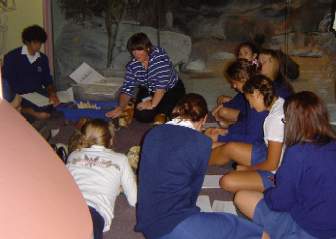
Yesterday I visited the Museo Australiano in Sydney, mainly to see their Rutas a través del tiempo exhibit on human evolution. It's a large and mostly up-to-date exhibit with lots of good material in it, including a large diorama of an A. afarensis family. Hello to the class from Port Hacking High School who were there on an excursion! Students were busily handling casts of skulls, comparing brain sizes, dentitions and facial angles, and using the exhibit material to research the questions in their activity sheets. Even better, they seemed to be finding it interesting. It's hard to imagine a better antidote to creationism.7 de mayo de 2004: Reseña en Science
This website received a glowing review from the NetWatch column in the April 30th issue of Science, probably the world's 2nd-most influential scientific journal. You can read the Science column in either HTML or PDF format (the pdf looks much better).29 de abril de 2004: El Simio Rasurado contraataca
The Washington Dispatch website has a new article, Orando en el Altar (sic) del Simio Rasurado, which makes some real howlers about human evolution - obviously copied straight from creationist literature. I've written a short response, which is entry no. 4 by 'habilis' en esta página. (links are now obsolete)21 de abril de 2004: Agrupación de especies
An interesting new paper by Katerina Harvati and colleagues in the Proceedings of the National Academy of Sciences (Feb 2004, 101:1147) compares the amount of difference between Neandertals and modern humans with the amount of difference typically found between different primate species. Their results strongly supported the conclusion that Neandertals should be considered a different species from modern humans. This reminds me of an influential paper published by Ian Tattersall in the Journal of Human Evolution in 1986 (JHE 15:165-175). Tattersall pointed out that closely related species in the primates generally differ in only a few characteristics, and sometimes none which would be detectable in the fossil record. In the hominids, by contrast, fossils are routinely lumped into the same species even when they contain far greater differences than are normally found between closely related primate species. For example, modern Homo sapiens is already a highly variable species, but often has specimens such as Kabwe, Arago and Petralona lumped into it even though they are well outside the range of modern H. sapiens. Sometimes these are classified as 'archaic' H. sapiens, a tactic not used with any other species. Tattersall argued persuasively that in any group other than the hominids, these differences would automatically result in the naming of new species, and that we should not treat humans differently. The Harvati et al. paper supports Tattersall's argument that we should be recognizing more species in the hominid fossil record.31 de marzo de 2004: El dedo del panda
For those interested in evolution, creationism and the 'intelligent design' controversy, there's a new blog which is essential reading. El Dedo del Panda is a group blog, whose participants include many scientists who are active in the fight against creationism. This blog only started a couple of weeks ago, but it already contains many excellent articles.
21 de febrero de 2004: Calavera de Ceprano
The Ceprano skull from Italy is considered between 700,000 and 900,000 years old, and is often attributed to H. erectus. Mallegni et al. (C. R. Palevol 2, 153-159) have used the Ceprano skull as the type specimen for a newly-named species, Homo cepranensis. However, I think that H. cepranensis will struggle to be generally accepted as a valid species, and at least one article has already appeared disputing its validity. (Gilbert et al., JHE 45:255-259, 2003)27 de diciembre de 2003: Arte neandertal
A recently-found rock was apparently modified by Neandertals to resemble a face. It doesn't look all that impressive, but the evidence seems strong that it was intentionally modified, and is not just an odd-shaped rock. This makes it important evidence for artistic behaviour in Neandertals. (See Hallado el 'rostro' de Neandertal en el Loira, from the BBC)27 de octubre de 2003: Nuevo artículo sobre Dmanisi
The November issue of Scientific American contains a short article about the Dmanisi hominids called Un forastero en una tierra nueva, by Kate Wong. Siga este enlace for a page on this site about these fossils, which have an intruiging mixture of Homo erectus and Homo habilis features.23 de octubre de 2003: Artículo de McClellan
Bill McClennan wrote an amusing article yesterday for the St. Louis Post-Dispatch, touching on paleoanthropology, human evolution, and creationism: Hombres, mujeres, Irak, creacionismo y toda esa cosa pesada21 de septiembre de 2003: Las siete hijas de Eva
 ADN mitocondrial (mtDNA) has become very
relevant to paleoanthropology since
the first Neandertal mtDNA sequence was discovered in 1997. Bryan Sykes' book
Las siete hijas de Eva is an excellent book for popular audiences
which explains the science behind mtDNA and why it is so useful for investigating
population histories. It also provides a good look at the way science is conducted,
the conflicts and rivalries that occur, and contains diversions into
fascinating topics such as the Iceman, golden hamsters, and the disappearance of
the Russian royal family including Princess Anastasia. The book is somewhat Eurocentric,
since most of Sykes' data (and the 'seven daughters') come from Europe, but a
section at the back of the book discusses some of what is known about the
worldwide distributions of mtDNA sequences.
ADN mitocondrial (mtDNA) has become very
relevant to paleoanthropology since
the first Neandertal mtDNA sequence was discovered in 1997. Bryan Sykes' book
Las siete hijas de Eva is an excellent book for popular audiences
which explains the science behind mtDNA and why it is so useful for investigating
population histories. It also provides a good look at the way science is conducted,
the conflicts and rivalries that occur, and contains diversions into
fascinating topics such as the Iceman, golden hamsters, and the disappearance of
the Russian royal family including Princess Anastasia. The book is somewhat Eurocentric,
since most of Sykes' data (and the 'seven daughters') come from Europe, but a
section at the back of the book discusses some of what is known about the
worldwide distributions of mtDNA sequences.
4 de septiembre de 2003: La trilogía Neanderthal Parallax
Hominidos, the first book in Robert Sawyer's Paralaje Neandertal trilogy, has just won the Hugo Award for best science-fiction novel of the year. The books involve contact with a parallel earth in which only Neandertals survived to the present day, and have developed a civilisation with considerable differences from our own. The second book in the series is Humanos, and the third, Híbridos, is to be published in September 2003.22 de agosto de 2003: Edición especial de Scientific American
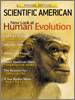 Scientific American has released a new special edition issue devoted to paleoanthropology:
Nueva mirada a la evolución humana. It contains a number of updated reprints of article about human evolution that have appeared in Scientific American over the last decade or so. The articles cover topics such as the Out of Africa and Multiregional models of human evolution, recent fossil discoveries such as Sahelanthropus and Orrorin, neandertals, mtDNA, cannibalism, and the evolution of bipedality and skin color.
Scientific American has released a new special edition issue devoted to paleoanthropology:
Nueva mirada a la evolución humana. It contains a number of updated reprints of article about human evolution that have appeared in Scientific American over the last decade or so. The articles cover topics such as the Out of Africa and Multiregional models of human evolution, recent fossil discoveries such as Sahelanthropus and Orrorin, neandertals, mtDNA, cannibalism, and the evolution of bipedality and skin color.
9 de agosto de 2003: Un nuevo cráneo keniano
Tres cráneos fósiles descubiertos en Dmanisi, Georgia, in the ex-USSR, between 1999 and 2001 were a big surprise to the paleoanthropological community. Not only were they the oldest and most primitive hominid skulls ever found outside of Africa, in both brain size and anatomy they seemed intermediate between Homo habilis and Homo erectus fossils, and their finders classified them as a new species, Homo georgicus.Ahora, un cráneo similar ha sido aparentemente encontrado en África por el equipo de Meave Leakey. Este nuevo cráneo, de 1,55 millones de años de antigüedad, fue encontrado en Kenia en 2000 y anunciado en la reunión de abril de 2003 de la Asociación Americana de Antropólogos Físicos. (Science, 300:893, 9 de mayo de 2003) El mismo informe también señaló que muchos de los científicos en la reunión eran escépticos sobre la validez de Homo georgicus como una especie separada. El experto en H. erectus Philip Rightmire es citado creyendo que los cráneos de Dmanisi son erectus. Finalmente, un cuarto cráneo más robusto, junto con algunos huesos esqueléticos, ha sido descubierto en Dmanisi.
28 de julio de 2003: Kenyanthropus platyops
Tim White argues in a recent paper (Hominidos tempranos - diversidad o distorsión? Science 299:1994, March 28 2003) that maybe too many new fossil hominid species are being named. He lists 4 recently-named species as examples. Curiously, two of these are ones for which he was a coauthor. However, he takes particular aim at Kenyanthropus platyops, named in 2001 from a fossil skull found by Meave Leakey's team. White argues that it is so severely distorted that it cannot be confidently identified, and may just be a Kenyan variant of Australopithecus afarensis. White is, by all accounts, both widely recognized as a superb anatomist and feared for the sharpness of both his pen and his tongue. To see why, read this paper (Una visión sobre la ciencia: Antropología física en el milenio, American Journal of Physical Anthropology 2000), which contains scathing verdicts on many claims from other scientists.22 de julio de 2003: Los neandertales de Shanidar
Good news: the Shanidar Neandertal fossils from the Iraqi National Museum have been discovered safe and sound. Ver abajo for more details.17 de junio de 2003: Caminando con hombres de cavernas
The new BBC series Walking with Cavemen is now being shown in the U.S. and Australia. Unlike the Walking with Dinosaurs and Walking with Beasts series which used computer-generated animals, Cavemen uses humans in makeup and costumes to represent other hominids. It's well done, though hominids just don't have the 'oomph' of dinosaurs.La BBC recibió bastante crítica por presentar especulaciones como hechos en Dinosaurs, y por lo tanto intentó hacer mejor con Cavemen. Sin embargo, el primer episodio presenta en detalle la idea de que el origen de la bipedestación se debe a su mayor eficiencia energética. Esto se presenta como si fuera una certeza virtual, pero en realidad el origen de la bipedestación es un tema controvertido, con muchas hipótesis diferentes flotando y sin un consenso claro. Y en el segundo episodio, se afirma que H. habilis es un ancestro humano, e implica que H. rudolfensis se extinguió. Esa es una opinión común, pero no algo sobre lo que podamos estar seguros. Es un asunto de preferencia, pero habría preferido un programa que diera más explicación de la evidencia detrás de las especulaciones y que no minimizara las incertidumbres.
Última hora: como era de esperar, Answers in Genesis ha emitido prontamente una respuesta, Caminando con hombres de cavernas - ¿hecho o ficción?. Naturalmente, enfatizan la cantidad de especulación que la serie realiza. Sin embargo, deberían estar más preocupados por la evidencia fósil, porque la evidencia es gran, gran, problema para el creacionismo.
31 de mayo de 2003: Desatando la tormenta
In January 2003, Answers in Genesis (AIG) web-published Soltando la tormenta, a highly critical review of Desencriptando los Misterios de la Creación, a new creationist book by Dennis Petersen. AIG rightly slams Petersen on many counts: sloppy reasoning, ignorance of the theory of evolution, irrelevant material, and the credulous use of many hoary creationist arguments which have long been discredited, even by many creationists. Examples include the moon dust argument, the shrinking sun, the Archaeopteryx fraud claim, the 'Japanese plesiosaur', the Paluxy River tracks, etc. Many of these arguments are listed on an AIG web page, Argumentos que creemos que los creacionistas NO deberían usar.Lo que encuentro divertido, sin embargo, es que el nivel de incompetencia de Petersen es reminiscente de casi toda la literatura creacionista que he leído desde los años 1970 y 1980, incluyendo material de AIG (entonces la Fundación de Ciencia Creacionista) y el Instituto de Investigación del Creacionismo (ICR). En aquel entonces, parece que era difícil encontrar un creacionista que *no* utilizara los argumentos del sol en contracción, del plesiosaurio o del polvo lunar. Brian Baxter, en un artículo del número de otoño de 2003 de the skeptic (la revista de los Escépticos Australianos), hace un punto similar, mostrando que muchos de los argumentos que ahora están siendo abandonados por AIG fueron utilizados entusiastamente por ellos a principios de los años 1980. AIG explica este giro diciendo que:
Todas las teorías científicas son falibles, y los nuevos datos a menudo derriban teorías previamente aceptadas. Los evolucionistas revisan continuamente sus teorías debido a nuevos datos, por lo que no debería sorprender ni causar angustia que algunas teorías científicas creacionistas también necesiten ser revisadas.but, in fact, most of these popular creationist arguments were incompetent from the day they were first made, and anticreationists were soon rebutting them, by doing the basic research that creationists had failed to do. It took a couple of decades of creationists being bludgeoned with the evidence of their incompetence before AIG obviously decided that they had to make a serious attempt to try and stamp out some of the more embarrassing creationist bloopers (for which they do deserve some credit). AIG has clearly had enough of having their fingers burnt by dodgy creationist arguments (see La cita del mono for a spectacular example). Nowadays one can see that they are making a effort to improve their game - gone are the days of obvious misquotations and misrepresentations, basic scientific errors, uncritical acceptance of claims from other creationists, failure to check original sources, etc. In a big slam at the old ICR-style of creationism, AIG even says, in a letter quoted in their Desatando la tormenta article:
Recomiendo encarecidamente que, si se considera una reescritura tan importante, se familiarice realmente y en detalle con toda la literatura creacionista moderna, no solo con los viejos materiales del ICR (por mucho que todos valoremos sus esfuerzos pioneros) reciclados.Take that, ICR! AIG clearly considers itself the new leader of the creationist movement, and they are right. Under the leadership of John Morris (son of ICR founder Henry Morris who was responsible for much of "the old ICR stuff") ICR has become increasingly stagnant while AIG has leapt ahead of it in visibility and clout.
12 de mayo de 2003: Eugene Dubois
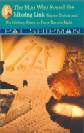 I've just read a new (well, 2001) biography of Eugene Dubois, the discoverer of Hombre Java, by the excellent science writer Pat Shipman. Shipman had unprecedented access to the Dubois archives and other material, so her book, El hombre que encontró el eslabón perdido, is surely the most detailed treatment of Dubois yet written. My only complaint would be that Shipman has used artistic licence to fill in many details of Dubois' life, and one is never quite sure where the boundary lies between documentable truth and fiction. Notwithstanding that, I thoroughly recommend the book. It illuminated the magnitude of Dubois' achievement, and his (often unattractive) personality, better than anything else I have ever read.
18 de abril de 2003: Los neandertales de Shanidar en el Museo iraquí
12 de junio: Based on widespread news reports, I had previously mourned the loss of virtually the entire collection of the Iraqi National Museum, which contained one of the world's greatest collections of material from the earliest civilizations. It now appears that much of the museum's collection has survived (see articles from The Washington Post, 8 de junio, 9 de junio, 11 de junio). Irked though I am at having been mistaken, this is far outweighed by my pleasure at knowing that this priceless collection has been preserved.21 de junio: Más noticias from the Washington Post: the estimate of losses is increasing again, to over 6000.
12 de julio: I initially wrote this item because los especímenes neandertales de Shanidar came from the Iraqi Museum. The July 2003 issue of National Geographic lists the Shanidar fossils among a list of the more important items from the Baghdad museum which are unaccounted for. However, una página de actualización en su sitio web says that the Shanidar specimens have since been found to be safely preserved.
28 de marzo de 2003: OH 65
 The latest fossil from Olduvai Gorge, OH 65, is a fossil upper jaw
with part of the lower face. It was discovered in 1995, but was not
made public until 2003 (Blumenschine et al. 2003, Science 299:1217-21
with a commentary by Phillip Tobias in the same issue). Based on its
similarities with both OH 7 (the type specimen of H. habilis) and
ER 1470, Blumenschine and his colleagues
suggest that 1470 is therefore a member of habilis, making rudolfensis
an invalid species.
The latest fossil from Olduvai Gorge, OH 65, is a fossil upper jaw
with part of the lower face. It was discovered in 1995, but was not
made public until 2003 (Blumenschine et al. 2003, Science 299:1217-21
with a commentary by Phillip Tobias in the same issue). Based on its
similarities with both OH 7 (the type specimen of H. habilis) and
ER 1470, Blumenschine and his colleagues
suggest that 1470 is therefore a member of habilis, making rudolfensis
an invalid species.
Naturalmente, nada es nunca tan sencillo en la paleoantropología. Otro científico con quien hablé pensó que OH 65 difería tanto de OH 7 como de otra pareja de fósiles que podrían ser mandíbulas de rudolfensis. El anatomista Bernard Wood, un principal promotor de rudolfensis en la última década, es otro científico poco probable que acepte el fin de esa especie. Por lo tanto, la conclusión de Blumenschine y sus colegas ciertamente no pasará desapercibida.
El artículo de comentario de Tobias señala que el número de especies de homínidos e incluso géneros ha aumentado considerablemente en los últimos años. Yo también había notado este mismo fenómeno: desde 1994, hemos visto la descripción de A. anamensis, Ar. ramidus, A. garhi, A. bahrelghazali, K. platyops, O. tugenensis, S. tchadensis y H. antecessor. Se trata de 8 nuevas especies y 4 nuevos géneros en menos de una década.
Una explosión similar de especies y géneros ocurrió en la primera mitad del siglo XX. Los científicos y los descubridores de fósiles crearon alegremente nuevos nombres para casi cada fósil significativo que se encontró. Este estallido de nombramiento tuvo muy poco que ver con la realidad biológica (la mayoría de los especímenes no eran muy diferentes de las especies existentes) y probablemente tuvo mucho que ver con el ego y el deseo de dejar su huella en la ciencia. Afortunadamente, la mayoría de estos nombres fueron descartados en una gran racionalización en la década de 1950, dejando solo una pequeña cantidad de taxones generalmente aceptados.
No sería sorprendente que algunas de las nuevas especies nombradas en la última década también hayan fallado en superar la prueba del tiempo. Sin embargo, muchas de ellas podrían sobrevivir: el reciente aumento en el número de especies nombradas podría ser bien un fenómeno real, causado por el hecho de que más personas están buscando fósiles de homínidos en más lugares que nunca antes.
Esta página es parte del FAQ sobre homínidos fósiles en el Archivo talk.origins.
Página de inicio |
Especies |
Fósiles |
Creacionismo |
Lectura |
Referencias
Ilustraciones |
Novedades |
Comentarios |
Búsqueda |
Enlaces |
Ficción
http://www.talkorigins.org/faqs/homs/blog.html, 05/31/2011
Copyright © Jim Foley
|| Envíame un correo electrónico 