
mer
Blog Paleoanthro
|
Mes réflexions occasionnelles sur la paléoanthropologie, le créationnisme et des sujets connexes. Sur ce site, je m'efforce d'être aussi objectif que possible, mais ici j'exprime mes opinions. Suivez ce lien si vous souhaitez m'envoyer des commentaires. |
Sujets: Génomes Denisovan et Néandertal, Australopithecus sediba, Squelette de Dmanisi, Le Hobbit le jour de Darwin, Poisson d'avril encore, Plus de fossiles de Flores, Défis de blog, De l'homme aux singes, À la conférence Mega, Pygmées sur Flores, Créationnistes et Dmanisi, National Geographic d'avril, Poisson d'avril !, Un Aborigène comme Néandertal, Derniers développements sur le Hobbit, 'Neandertal' : une arnaque, Homo floresiensis le jour de Darwin, Le débat sur le Hobbit, H. floresiensis microcéphale ?, Dix ans aujourd'hui, Homo floresiensis - le Hobbit, Dembski sur les origines humaines, encore, La malédiction d'Adam, Le dessein intelligent en 1710, Des fossiles dans la chair, Crâne d'Olorgesailie, Dembski sur les origines humaines, Critique de Gish, Musée d'Australie, Critique dans Science, Singe tondu, Regroupement, Le pouce du panda, Crâne de Ceprano, Art néandertalien, Article sur Dmanisi, Article de McClellan, Les sept filles d'Eve, Parallaxe néandertalienne, Scientific American, Crâne kényan, K. platyops, Shanidar, Marche avec des hommes préhistoriques, Déchaîner la tempête, Eugène Dubois, Musée irakien, OH 65
31 mai 2011 : Génomes du dénisovanien et du Néandertal
Last year the first draft genome for Neandertal nuclear DNA was published. Genetic sequences for mtDNA and nuclear DNA from a finger bone from Denisova in Siberia were also published, showing that the bone had very ancient mtDNA, but belonged to a sister group of the Neandertals. Fascinatingly, it seems that Neandertals made about a 2.5% genetic contribution to all modern non-African humans, and the Denisovan genes made about a 5% contribution to modern Melanesians. Some posts discussing these finds at the Panda's Thumb:Mélange génétique Néandertal/humain - la réponse de la Terre ancienne
Un génome complet de Denisova, en Sibérie
Denisova et le problème des espèces
6 mai 2010 : Australopithecus sediba
Last month the discovery of Australopithecus sediba was announced. I'll be updating the site soon to cover that. In the meantime, check out these articles from the Le pouce du Panda:Australopithèque sediba et la réponse créationniste
Créationniste contre créationniste sur Homo habilis
2 janv. 2009 : Le squelette de Dmanisi
In 2007, the discovery of des ossements fossilisés du corps (as opposed to the head) of the Dmanisi hominids was announced. These bones show that the Dmanisi hominids were bipedal, but with some primitive characteristics particularly in the upper body. The bones are definitely not those of apes, but they are not quite like those of modern humans either. At the Panda's Thumb, I have responded to articles about these fossils by Casey Luskin de l'Institut de découverte, and Réponses dans la Genèse. These creationist responses are particularly hilarious because they contradict one another: Luskin thinks that the bones are from apes, while AIG thinks they belong to humans. Encore une fois, creationists confirm that they can't tell the difference between apes and humans even as they assure us that all the fossils are either ape or human.20 juin 2007 : Le Hobbit le jour de Darwin
 A few months ago I attended a talk by Professor Colin Groves of the Australian National University: 'An update on Homo floresiensis, a.k.a. the "Hobbit"'. As is well known, there has been an unusually bitter scientific debate over the last couple of years as to whether le hobbit is indeed a new species, or just a small microcephalic human. The term 'microcephaly' covers a range of conditions which cause unusually small brain sizes. (Disclaimer: Groves is not a disinterested participant in this debate, having coauthored a paper which argues against the microcephalic interpretation.) Groves went over a long list of unusual features of the hobbit. The limb bone ratios are unlike those of any apes or humans. They are also very robust: in spite of their small size, hobbits would have been remarkably strong. The arms are too long for humans, and they had unusually large feet (like Tolkien's hobbits!). The lower jaw lacks a chin, a feature found in all humans (even people who look chinless), and that is also true of a second jaw which has been found. The upper end of the humerus has a twist not found in modern humans, but which was then found in the Turkana Boy Homo erectus skeleton once it was looked for. Groves' conclusion: all of these features make it overwhelmingly unlikely that the hobbit was just a small microcephalic human. (You can find Groves' talk on YouTube, in seven installments:
1,
2,
3,
4,
5,
6,
7)
A few months ago I attended a talk by Professor Colin Groves of the Australian National University: 'An update on Homo floresiensis, a.k.a. the "Hobbit"'. As is well known, there has been an unusually bitter scientific debate over the last couple of years as to whether le hobbit is indeed a new species, or just a small microcephalic human. The term 'microcephaly' covers a range of conditions which cause unusually small brain sizes. (Disclaimer: Groves is not a disinterested participant in this debate, having coauthored a paper which argues against the microcephalic interpretation.) Groves went over a long list of unusual features of the hobbit. The limb bone ratios are unlike those of any apes or humans. They are also very robust: in spite of their small size, hobbits would have been remarkably strong. The arms are too long for humans, and they had unusually large feet (like Tolkien's hobbits!). The lower jaw lacks a chin, a feature found in all humans (even people who look chinless), and that is also true of a second jaw which has been found. The upper end of the humerus has a twist not found in modern humans, but which was then found in the Turkana Boy Homo erectus skeleton once it was looked for. Groves' conclusion: all of these features make it overwhelmingly unlikely that the hobbit was just a small microcephalic human. (You can find Groves' talk on YouTube, in seven installments:
1,
2,
3,
4,
5,
6,
7)
Après la conférence, j'ai demandé à Groves si la communauté scientifique parvenait à un consensus concernant le hobbit. La réponse était sans équivoque : bien que le débat soit très animé, l'interprétation microcéphalique est soutenue par un petit nombre de scientifiques ; elle est rejetée par une écrasante majorité. Lors d'une conférence récente, Colin a pu discuter avec plusieurs paléoanthropologues de premier plan. Tous n'avaient aucun doute que le hobbit soit une nouvelle espèce. Et, lors d'une des conférences, lorsqu'une référence a été faite à l'interprétation microcéphalique, une vague d'amusement a traversé l'auditoire. Le créationniste Marvin Lubenow, dans un nouvel article « Les Hobbits étaient de vrais humains ! », affirme que
Contrairement à l'affirmation des découvreurs selon laquelle ces fossiles représentent une nouvelle espèce humaine, une seconde théorie qui gagne en popularité est que ces fossiles ne représentent pas une nouvelle espèce humaine, mais plutôt des nains ou des pygmées souffrant peut-être de microcéphalie, avec des corps et des cerveaux anormalement petits.but this would appear to be wishful thinking. The microcephaly supporters may be making a lot of noise, but not many converts.
Par ailleurs, Mike Morwood, l'un des découvreurs du hobbit, était présent à la conférence et je l'ai rencontré très brièvement. Il venait de coauthorer un nouveau livre, The Discovery of the Hobbit, disponible en Australie. Il a maintenant été publié en format relié aux États-Unis en mai 2007 sous le titre A New Human. Un livre à ne pas manquer pour quiconque souhaite en savoir plus sur l'une des découvertes paléoanthropologiques les plus passionnantes de tous les temps.
1er avril 2006 : Pâques de l'humour !
Lest we forget - the April 1997 issue of Discover magazine had une assez bonne blague du 1er avril about some Neandertal musical instruments that had supposedly been discovered in Germany. It was an unlikely collection, featuring bagpipes, a tuba, a triangle and a 'xylobone', along with a cave painting of marching musicians. In September 2000 l'Institut de recherche sur la création a été dupé and featured Marvin Lubenow presenting this evidence in one of their radio programs. I pointed that out on this website about a month later, and the ICR quickly apologized and retracted the claim. However, no erroneous argument ever completely disappears from creationist literature. I later found the April Fool article cited again in un article de Brad Harrub on the Answers in Genesis website (the citation has now been silently removed). Harrub also thinks that the Java Man skullcap belongs to a gibbon - even though AIG has admitted that c'est un argument discrédité that creationists shouldn't use any longer (that claim has now been quietly removed too). Harrub's article was also published in AIG's 'peer-reviewed scientific journal', the Revue technique, which goes to show what a joke creationist peer review is.18 octobre 2005 : Plus de fossiles de hobbits de Flores
The latest rounds have been fired in the war over the interpretation of the "Hobbit" fossils from Indonesia that stunned the world in 2004. The hobbit discoverers have ont publié des détails sur certains nouveaux fossiles: more arm bones from the original skeleton, another jaw bone, and many pieces from other individuals. According to them, and some other commentators, the new fossils confirm that the hobbit was a typical member of its population, and not an aberrant individual (in fact, some bones come from an individual plus petit than the first hobbit). However they seem less certain now that the hobbit is descended from Homo erectus. The new bones show some similarities to australopithecines; whether this is due to a genealogical relationship or convergent evolution. In short, it's still a big puzzle. John Hawks has a lengthy analysis of the new fossils on his blog at http://johnhawks.net/weblog/fossils/flores/flores_update_oct_2005.html.Un article antérieur de Falk et al. soutenait que le crâne du hobbit ne semblait pas particulièrement similaire à celui des microcéphales. Un nouvel article de Weber et al. dans Science affirme, au contraire, que le hobbit ressemble en effet aux crânes de microcéphales suffisamment pour que l'hypothèse ne puisse être rejetée. Falk et al. restent cependant sceptiques face à leurs affirmations. Ann MacLarnon a également selon les rapports découvert un crâne de microcéphale qui ressemble au hobbit.
7 septembre 2005 : Défis de blog
Recently I've been on a couple of blogs, challenging creationists to classify some of the more problematical (for them) specimens from the hominid fossil record. You can check out my posts at the Le Doigt du Panda, and on Ed Brayton's blog Dispatches from the Culture Wars (about halfway down the page).8 août 2005 : De l'homme aux singes sur la chaîne History
De l'homme aux singes, the new History Channel documentary, has just aired in the US. Since I don't live there I can't see it, but you can read Le commentaire de Paul Myers à ce sujet at Pharyngula. Myers give it a qualified 'OK'; he disliked some things about it, but it was better than he had feared. See also a review by John Hawks ici.26 juillet 2005 : À la conférence Mega
Jason Rosenhouse, while attending the creationist Grande Conférence, went to listen to speaker Phillip Bell talking about Hommes singes, maillons manquants et la Bible. As he points out, it was the standard creationist boilerplate: Piltdown Man, fully ape or fully human, Lucy, Neanderthal Man, etc. etc. Like all creationists, Bell shied far away from the fossils that would put the lie to the idea that all the hominid fossils are just apes or humans. You'll jamais see a creationist discuss the skulls around that problematic 700cc area, and try to justify on anatomical grounds why some are apes and some are humans. And you certainly won't see photos of those skulls (like you will sur ce site); wouldn't want to confuse the faithful, after all! (P.S: you can find Phillip Bell's response ici, and Rosenhouse's reply ici.)3 juin 2005 : Pygmées de Flores
There's une histoire intéressante dans Time about some modern inhabitants of the Indonesian island of Flores who are extremely small and live near the Liang Bua cave where Homo floresiensis was found. Interestingly, they seem to think their ancestors lived in the Liang Bua cave. The scientists who think that the hobbit was merely a microcephalic small modern human are of course greatly heartened by this development, but the scientists who discovered the hobbit are standing firm that it is a new species, and presumably find the presence of nearby pygmies merely coincidental. A quote from one of them: "Of course, there are small-bodied people on Flores, but they don't have brains one-third the size of ours, or unusually shaped pelvises or very long arms like H. floresiensis." This controversy doesn't look like ending any time soon.19 mai 2005 : Créationnistes et Dmanisi
I recently got a copy of the new 2nd edition of Marvin Lubenow's book Des os de controverse, a creationist book about the evidence for human evolution. I'll do a fuller review of it later, but there's one thing I want to comment on now. In 2002, the discovery of un nouveau crâne d'hominidé de Dmanisi, Georgia, was announced. This skull had a very small brain size of 600 cc, in the Homo habilis range. Two other skulls which had been announced in 2000 had brain sizes of 650 cc and 780 cc. The skulls are about 1.8 million years old and had a mixture of features from H. erectus and H. habilis and although the smallest one seemed slightly more primitive, the discoverers saw no reason not to put them all in the same species.J'ai trouvé ces crânes particulièrement intéressants car ils comblent parfaitement le fossé que les créationnistes aiment affirmer séparer les humains des primates non humains. Généralement, les créationnistes moins compétents (c'est-à-dire ceux qui pensent encore que le Homme de Java et le Homme de Pékin sont des crânes d'apes ou de singes) ont une ligne de démarcation d'environ 700 cc ; généralement, tout ce qui dépasse cette limite est humain, et tout ce qui est en dessous ne l'est pas. Bien qu'il y ait quelques crânes fragmentaires d'habilis estimés à la fourchette de 650-700 cc, il n'y avait aucun crâne d'hominidé modérément complet entre environ 620 et 720 cc, ce qui est devenu le « fossé » séparant les humains des non-humains. Mais maintenant, nous avons trois crânes du même endroit, de la même époque et de la même espèce, assis pile sur ce fossé - au-dessus, en dessous et dedans. Comment, me suis-je demandé, Lubenow aurait-il pu gérer cela ?
Bien, la réponse est intéressante. Le plus grand crâne (780 cc) est répertorié à la p.350 du BoC dans un tableau de fossiles d'H. erectus (classés par lui comme humains). Les deux autres crânes, de 600 et 650 cc, sont répertoriés à la p.352 dans un tableau de fossiles d'H. habilis (généralement classés par lui comme non-humains). Donc, autant que je puisse le dire, Lubenow considère le plus grand crâne comme humain et les deux plus petits crânes comme non-humains. On pourrait penser que cela mériterait une justification anatomique, mais aucune n'est fournie. En fait, à part ces deux entrées de tableau, Dmanisi n'est pas mentionnée dans le livre de 350 pages de Lubenow qui est censé être un traitement exhaustif des preuves de l'évolution humaine.
L'émission de radio de l'ICR du 23 novembre 2002, sur laquelle Lubenow est apparu, a été tout aussi évasive. Il y a eu une suggestion que les crânes de Dmanisi pourraient être une « méprise », sans justification, mais à la fin, l'ICR et Lubenow n'ont pas rendu de verdict sur les crânes. Answers in Genesis émet généralement une réponse aux nouveaux fossiles hominidés annoncés dans les médias, mais ils ont également traité les crânes de Dmanisi comme s'ils n'existaient pas. En fait, je ne suis pas au courant de aucun créationniste qui les ait abordés frontalement. Je me demande pourquoi cela pourrait être le cas ?
25 avril 2005 : National Geographic
The National Geographic d'avril is definitely worth getting if you're interested in hominids. There's an article on the hobbits, Homo floresiensis, and another article about the Hominidés de Dmanisi from Georgia; in particular, a new skull has been discovered there. The new skull is of interest because it is almost entirely toothless, suggesting that the individual must have received considerable support from his companions. This skull was also published on this month (Lordkipanidze et al. 2005, Nature, 434:717).1er avril 2005 : Pâques de l'humour !
The April 1997 issue of Discover magazine had une assez bonne blague du 1er avril about some Neandertal musical instruments that had supposedly been discovered in Germany. It was an unlikely collection, featuring bagpipes, a tuba, a triangle and a 'xylobone', along with a cave painting of marching musicians. In September 2000 l'Institut de recherche sur la création a été dupé and featured Marvin Lubenow presenting this evidence in one of their radio programs. I pointed that out on this website about a month later, and the ICR quickly apologized and retracted the claim. However, no erroneous argument ever completely disappears from creationist literature. I've recently noticed the April Fool article cited again in un article de Brad Harrub on the Answers in Genesis website (mise à jour: the citation has now been removed). Harrub also thinks that the Java Man skullcap belongs to a gibbon - even though AIG has admitted that c'est un argument discrédité that creationists shouldn't use any longer (2ème mise à jour: now that claim has been quietly removed too). Harrub's article was also published in AIG's 'peer-reviewed scientific journal', the Revue technique. What is AIG's peer-review process like, if clangers like these can get through it?27 mars 2005 : Un Aborigène comme Néandertalien
Today's copy of The Australian newspaper contains an article (not online) about two Australian Aboriginal boys who are auditioning for the role of a Neandertal boy in a German film. A number of people, including me, find this somewhat unsettling. As paleoanthropologist Colin Groves is quoted as saying, "I've never seen anybody look less like neanderthal man than these two kids". It's hard to avoid the impression that the film-makers think an Aboriginal actor will be more readily accepted as primitive. Even if true, this hardly strikes me as a stereotype we should be reinforcing. The actor playing the part will wear a rubber mask, so it's only their skin color that will show their aboriginal status. If the face is hidden, why choose an aboriginal actor? (Especially since there are widespread suspicions that Neandertals may have been fair-skinned.) On the other hand, both boys are enthusiastic about playing the role, and one can only be happy for them personally for getting the opportunity to star in a movie.7 mars 2005 : Derniers développements sur le Hobbit
There's un nouvel article on Science Express by Falk and colleagues about the brain of Homo floresiensis, and un excellent commentaire à ce sujet at Carl Zimmer's blog, The Loom. There's un article dans le Canberra Times (March 2) which sheds some light on the personal differences underlying the scientific debate about Homo floresiensis, which centres on whether the Hobbit really is a new species, or a Homo sapiens with microcephaly. A debate on the Australian current affairs program Lateline screened on March 3rd; you can read the transcripts ici and ici (see also another Lateline segment from 4 mars ). There was also a segment on 60 Minutes on Feb 27th, which interviewed scientists from the opposing camps; you can read the transcript of that ici.En résumé, l'article Science Express a comparé le cerveau du hobbit à ceux de nombreux autres hominidés, y compris un microcéphale. Il a conclu que le cerveau du hobbit était différent de tout le reste, bien qu'il ressemble le plus à Homo erectus, et présentait de nombreuses différences à la fois par rapport aux humains normaux et au microcéphale. Le lobe frontal du cerveau du hobbit, responsable du comportement intelligent, semble particulièrement bien développé. Les chercheurs estiment que leurs résultats renforcent considérablement l'interprétation selon laquelle le hobbit est une nouvelle espèce. Sur Lateline cependant, Henneberg a défendu l'interprétation de la microcéphalie en affirmant que le crâne microcéphale étudié par Falk et al. est un type de microcéphalie différent de celui avec lequel il l'a comparée. La similitude supposée entre le hobbit et le microcéphale n'a pas encore été démontrée. Des recherches supplémentaires se concentreront sans doute sur la résolution de cette question.
Et, le hobbit a également fait la une des journaux la semaine dernière car Teuku Jacob, le scientifique indonésien qui avait « emprunté » les restes et les avait ensuite conservés pendant considérablement plus longtemps que prévu, les a finalement rendus aux découvreurs.
Mise à jour, 31 mars : Après avoir lu le papier de Falk et al. et ses matériaux supplémentaires, je trouve l'argumentation de Henneberg encore moins convaincante qu'auparavant. Bien qu'ils n'aient eu qu'un seul crâne microcéphale, Falk et al. sont parfaitement conscients des différentes formes de microcéphalie qui peuvent survenir et n'ont vu aucune raison de croire que l'une d'elles s'appliquait à LB1 :
La microcéphalie vraie (MV, microcéphalie primaire ou véritable) est un mode autosomique récessif associé à huit loci et trois gènes connus. La MV se caractérise par des voûtes crâniennes petites par rapport aux squelettes faciaux, des fronts inclinés et des sommets pointus (S3-S4). L'endocaste virtuel que nous avons produit à partir d'un moulage d'un crâne de MV reflète la forme pathologique du crâne. La microcéphalie avec schéma gyral simplifié (MSG) est une autre forme de microcéphalie congénitale, avec cinq types reconnus se manifestant par un nombre réduit et une faible profondeur des sillons corticaux (S5). La topographie corticale de l'endocaste de LB1 l'exclut de cette forme de microcéphalie. La microcéphalie secondaire est un diagnostic générique pour les individus ayant des circonférences occipito-frontales inférieures à -2 écarts-types pour l'âge et le sexe (S3), et n'est pas nécessairement associée à une tête pointue (si c'était le cas, cela exclurait automatiquement LB1). Contrairement à la MV, la microcéphalie secondaire peut être attribuée à diverses causes, notamment une exposition toxique intra-utérine, des anomalies chromosomiques ou des maladies infectieuses (S3). Puisque LB1 manque de la forme de tête diagnostique associée à la MV et de la morphologie gyrale associée à la MSG, son interprétation comme microcéphalique ne peut être faite que en affirmant qu'il s'agit d'une microcéphalie secondaire (S6). Cela revient à dire que LB1 a une petite tête (littéralement microcéphalique) parce qu'il a une petite tête, ce qui ne se prête pas à l'essai d'hypothèses. (Falk et al. 2005, matériel complémentaire)
Ce n'est pas dire que Falk et al. ne puissent pas se tromper, bien sûr, mais pour le moment, ils semblent avoir fait le meilleur travail pour étayer leur thèse, et c'est maintenant à Henneberg de fournir des contre-preuves.
28 février 2005 : L'escroquerie du « Néandertal »
It has recently been reported (Telegraph, Guardian) that German scientist Reiner Protsch had committed a number of scientific frauds. Protsch apparently could not even operate his own carbon-dating equipment, and routinely made up dates for bones that had been sent to him for dating, often giving recent specimens dates that were much too old. Many webpages have repeated the following quote about the significance of these frauds:
Chris Stringer, spécialiste de l'Âge de la Pierre et responsable des origines humaines au Musée d'histoire naturelle de Londres, a déclaré : « Ce qui était considéré comme une preuve majeure montrant que les Néandertaliens ont autrefois vécu en Europe du Nord a été abandonné. Nous sommes obligés de réécrire la préhistoire. »
Stringer, cependant, dit qu'il ne l'a jamais dit :
Ceci est une citation inventée, car je n'ai jamais accordé une grande importance à la signification de la découverte du Hahnofersand dès le début. À ma connaissance, il n'a jamais été appelé Néandertal, mais certaines personnes ont observé des traits « mixtes » dans sa morphologie. Son retrait ne réécrit certainement rien de ce que j'ai jamais dit sur les Néandertaliens, encore moins réécrire la préhistoire ! (Chris Stringer, communication personnelle)
Cela me semble juste. Je n'ai jamais entendu parler de l'un des fossiles que Protsch a daté à tort – ils sont tous obscurs et sans importance pour le grand tableau de l'évolution humaine. D'après les rapports d'actualité, il semble que tous les fossiles en question soient des humains modernes, même si de nombreux sites web font référence aux Néandertaliens dans leurs titres d'articles. Le premier article que je puisse trouver utilisant cette citation provient du Telegraph. Stringer a dit ceci à propos de cet article :
Je n'ai jamais vu ce texte publié et j'étais donc ignorant de la source de la citation fausse. Je me souviens avoir parlé au journaliste concerné, et selon ce que je me rappelle, les mots en question étaient ce qu'il m'avait dit, en me demandant si j'étais d'accord avec l'énoncé. Je lui ai répondu que le « fossile » n'avait jamais été considéré comme un Néandertalien et qu'il avait été brièvement important dans les années 1980 pour des personnes comme Gunter Brauer, qui plaaidaient pour un flux génique entre les Néandertaliens et les humains modernes. Cependant, comme tout celui qui est familier avec la littérature paléoanthropologique des vingt dernières années le sait, la découverte a eu une signification négligeable pour le débat récent. Il faut dire que cela reflète également la faible réputation du Dr Protsch dans le domaine, comme tout celui qui est familier avec la littérature récente le sait également. (Chris Stringer, communication personnelle)So, it's all a storm in a teacup. The media exaggerated the significance of these frauds, with phrases like "History of modern man unravels" and "key discoveries" occurring in headlines.The frauds are doubtless a blow for the researchers unlucky enough to have sent samples to Protsch for dating, but do nothing to weaken the evidence for human evolution (despite l'occasionnel créationniste claiming otherwise).
16 février 2005 : Homo floresiensis le jour de Darwin
For Darwin Day (Feb 12th), the Canberra Skeptics arranged a talk by paleoanthropologist Colin Groves at the National Museum of Australia on the subject of Homo floresiensis, the "Hobbit". It's clearly a popular subject; the small lecture theatre was filled to capacity with a few hundred people.
Certains scientifiques ont contesté l'idée que floresiensis soit une nouvelle espèce, suggérant plutôt que le squelette est un humain moderne pathologique. Maciej Henneberg, entre autres, a affirmé qu'il ressemble étroitement à un crâne microcéphale de 4000 ans trouvé en Crète. Groves a montré des images de ce crâne et les a comparées au hobbit. À mon jugement non qualifié, elles ne ressemblaient pas très similaires, ni, apparemment, au jugement de nombreux scientifiques qualifiés. Le fémur du hobbit présente également des différences par rapport à celui de tout autre hominidé, et le bassin s'élargit davantage que chez H. sapiens ou H. erectus.
Groves a attiré mon attention sur un article publié dans la revue Before Farming, où plusieurs scientifiques ont exprimé leurs réactions initiales à H. floresiensis, et Brown et Morwood, deux des découvreurs de floresiensis, ont répondu. En réponse à l'affirmation de Henneberg et Thornes concernant la microcéphalie, Brown et Morwood ont fortement contesté : « C'est une pièce de « recherche » extrêmement mal informée et mal conçue, et elle n'aurait pas pu être publiée dans un journal pair-review substantiel. Les auteurs n'ont soit pas lu l'article sur lequel ils commentent, soit ont des connaissances très limitées en anatomie évolutive des hominidés, peut-être les deux. » (Ouch ! Le différend sera sans doute bientôt porté à la littérature pair-review)
Le papier original sur H. floresiensis a spéculé que les bras du squelette pourraient se trouver dans des sédiments encore non excavés, et ils ont effectivement été découverts lors de la prochaine saison de fouilles l'année dernière. Les découvertes initiales comprenaient une partie d'un radius (os du bras), que les découvreurs ont affirmé être cohérent avec la hauteur de 1 mètre du squelette de hobbit, tandis que Henneberg a soutenu qu'il était cohérent avec une hauteur d'environ 1,5 mètre. Un radius provenant des nouveaux os du bras (qui appartiennent au squelette précédemment découvert) correspondrait, selon les rapports, à la longueur du radius original, renforçant la conclusion que le squelette est un membre normal de sa population et non un cas atypique. Incidemment, Groves n'est pas entièrement convaincu par l'idée que le hobbit soit une forme naine de Homo erectus. Bien que géographiquement H. erectus semble être l'ancêtre le plus probable, certaines caractéristiques anatomiques suggèrent à son égard une possible relation avec Homo habilis.
23 janvier 2005 : Le débat sur le Hobbit
The Guardian newspaper from Britain has un article intéressant sur le débat scientifique surrounding Homo floresiensis, a.k.a. the Hobbit. There are some modern Indonesians living on Flores who are extremely short, not much more than 4 feet tall (122 cm). This is quite close to the Hobbit skeleton's height of 1 metre. If, as its discoverers believe, the Hobbit is descended from Homo erectus, this closeness in height is only coincidental. If, as some dissenters interviewed in the article claim, the skeleton is only an unusual Homo sapiens, it might not be coincidental: the Hobbit could conceivably be ancestral to some modern Indonesians. Anthropologist John Hawks has une nouvelle entrée de blog about H. floresiensis, as does science journalist Carl Zimmer, who links to an essai de Teuku Jacob , an Indonesian paleoanthropologist at the center of the dispute. Finally, there's a reportedly excellent article on floresiensis by Kate Wong coming out in the February issue of Scientific American.10 décembre 2004 : H. floresiensis est-il microcéphale ?
Anatomist Maciej Henneberg a affirmé that the Crâne du « Hobbit » is extremely similar to that of a microcephalic specimen from Crete (microcephaly is a medical condition which results in small brain sizes). I suspect Henneberg, though a respected anatomist, will turn out to be wrong for a number of reasons. One is that Brown and his colleagues are also respected anatomists, and they have had access to the fossil and many months in which to study it. Brown considered the possibility of microcephaly even before Henneberg raised it, and rejected it:Il est plus difficile, je suppose, d'exclure l'analogie avec les humains modernes anormaux, comme les nains hypophysaires ou les nains microcéphales, car vous pouvez y avoir des personnes de petite taille qui ont également une petite taille cérébrale. Très peu de ces personnes atteignent réellement l'âge adulte et elles présentent une gamme de caractéristiques distinctives, selon le syndrome particulier qu'elles ont, dans tout le crâne et le reste du squelette. Aucune de ces caractéristiques n'est présente chez Liang Bua. Il possède un ensemble de traits clairement archaïques qui sont répliqués chez une variété d'hominidés précoces et ces traits archaïques ne sont pas trouvés chez aucun humain anormal qui ait jamais été enregistré. Nous avons maintenant les restes de 5 ou 6 autres individus du site, donc ce n'est pas qu'un seul. Il existe maintenant une population de ces choses et elles partagent toutes les mêmes caractéristiques. (Peter Brown, dans une interview avec Scientific American)
Deuxièmement, la microcéphalie est une condition rare - la probabilité de trouver un fossile qui aurait eu par hasard une microcéphalie serait très faible. Si d'autres spécimens similaires à LB1 au niveau du crâne sont découverts, nous pouvons efficacement écarter la microcéphalie comme explication. Troisièmement, l'article de Brown sur floresiensis a passé une revue par les pairs extensive de 12 autres experts avant publication. Cela ne prouve pas qu'il ait raison, mais cela lui confère une crédibilité considérable.
Autre nouvelle concernant H. floresiensis, le paléoanthropologue le plus éminent d'Indonésie, Teuku Jacob, a suscité la controverse en emportant les fossiles du centre où ils étaient stockés vers son propre laboratoire pour les étudier. Jacob avait également été rapporté dans les journaux comme étant sceptique quant à l'idée que le Hobbit fût une nouvelle espèce ; il croyait qu'il s'agissait d'un membre de la "race australomélanesienne", et n'avait que 1 300 à 1 800 ans.
Et, il y avait un article dans le Sydney Morning Herald du 5 décembre (http://smh.com.au/articles/2004/12/05/1102182161157.html; une inscription peut être requise) concernant certains villagers indonésiens qui auraient capturé une petite femme il y a trois semaines ! Malheureusement, elle a échappé, donc nous ne pouvons pas déterminer si elle est une H. floresiensis vivante. Je ne parierais pas là-dessus, cependant.
11 novembre 2004 : Dix ans aujourd'hui !
Guess what? This website is 10 years old today. I started this project in 1994 because the talk.origins archive had no material on human evolution, even though it's a topic of crucial interest to the creation/evolution debate. The first version of this site was not a web page, but a 53K text file available by ftp from the talk.origins archive, which at the time was an ftp site rather than a website. (ftp stands for File Transfer Protocol, and was a common way of getting files to and from other computers before the web took off). Originally it was just a list of descriptions of species and fossils and a brief rebuttal of some creationist arguments. I converted it into a web page in November 95 and added the first illustrations. The page had grown to 151K by April 96, and in October 96, it was split into multiple web pages. The site has been steadily growing since 1994. At the moment, it consists of 170 web pages totalling about 1.8M in size (a number of them by other contributors), along with about 230 image files. The home page gets about 400 hits per day. This site is now one of the top resources on human evolution on the web, and (I think) the best source of information about creationist arguments on human evolution on or off the web. I've enjoyed creating the site and plan to keep doing it for a while yet. I hope you've enjoyed reading it!28 octobre 2004 : Homo floresiensis - le Hobbit
Un des fossiles les plus étonnants jamais découverts: scientists have announced the discovery of a new species of dwarf human, Homo floresiensis, on the Indonesian island of Flores. Bones have been discovered from about 7 individuals, including an almost complete skull and partial skeleton. They show that these people were only about 1 meter (3ft) tall as adults, with an astonishingly small brain size of 380cc. Compare this with the average modern human brain size of 1350-1400cc; 380cc is about average for a chimp. It is thought that this is a dwarf form that evolved from Homo erectus; it is not uncommon for dwarf species of large mammals to evolve on islands. Even more surprising, these critters made stone tools and used fire. H. floresiensis was at the site by 38,000 years ago and remained there until at least 18,000 years ago. Anecdotal evidence from Indonesia raises the fascinating possibility that they could have survived on Flores up until about 500 years ago, when the Dutch first arrived there. Some good links:- Spécial Nature sur l'homme de Flores
- Une nouvelle espèce humaine miniaturisée découverte, par Scientific American
- Découverte du « Hobbit » : un ancêtre humain minuscule trouvé en Asie, par National Geographic
- Commentaire de Carl Zimmer sur The Loom
- Commentaire de Paul Myers sur Pharyngula
- Commentaire du weblog de John Hawks
Flores a également fait la une des journaux en 1998, lorsque Mike Morwood (qui est également impliqué dans cette nouvelle découverte) a annoncé la découverte de preuves archéologiques de Homo sur l'île il y a 840 000 ans. Étant donné que Flores est censée avoir toujours été séparée de Java par un passage maritime profond, cela indiquait une capacité jusqu'alors insoupçonnée de H. erectus à franchir des barrières maritimes.
C'est l'une des découvertes de fossiles hominidés les plus importantes de tous les temps. Pour ce qui est d'une inattendue vertigineuse, rien ne la bat. Attendez-vous à ce que Flores devienne une zone très chaude dans les études sur l'évolution humaine au cours des prochaines années ! (Il sera encore plus amusant de voir les créationnistes essayer de l'expliquer...)
11 octobre 2004 : Dembski sur l'origine humaine, encore
William Dembski of the Discovery Institute has just updated cet article sur l'origine de l'homme. And, as before, Ian Musgrave has critiqued the article at the Panda's Thumb, Dembski sur l'origine humaine, reprise. The changes are fairly minimal, and don't correct most of the problems that have been pointed out.25 septembre 2004 : La malédiction d'Adam
I've just read Bryan Sykes' book La Malédiction d'Adam about the Y-chromosome responsible for maleness in mammals. It's a sister - or brother, rather - book to his work about ADN mitochondrial (a.k.a. mtDNA), Les sept filles d'Eve. Y chromosomes are inherited through our paternal lineages, mtDNA through our maternal lineages. The book is a fascinating journey through the biology of the Y chromosome and sex determination. Among other things, Sykes tracks down the Y chromosomes of Genghis Khan and the Scottish chieftain Somerled, both of whose Y chromosomes have had astonishingly successful careers and are now carried by millions of men worldwide. When I read Richard Dawkins' book Le Gène Égoïste many years ago, I never did understand what Dawkins was getting at - after all, if an individual reproduces so do his/her genes, and vice versa, so it seemed to be an irrelevant distinction whether genes or individuals were the unit of selection. La malédiction d'Adam made it clear why; different parts of our genome have different priorities and strategies for getting reproduced (for example, Sykes tells of Y chromosomes and mtDNA genomes which seem able to preferentially reproduce themselves by only causing sons or daughters to be born). Towards the end of the book, Sykes gets into some rather alarming speculations, suggesting that degeneration of the Y chromosome is approaching a critical point that could lead to the extinction of males, then females, within about 100,000 years. This is not, obviously, something that needs to be worried about just yet, but it's a short period of time compared to the tens of millions of years that our mammallian lineage stretches back for. Why should it be happening now? Maybe there's a flaw in Sykes' reasoning, though it's not obvious to me what it could be. A number of Amazon reviewers chided Sykes for his speculations, but I had no problem with it. I recommend this book because I think most readers will, as I did, find it thought-provoking and learn a lot of fascinating stuff from it.En passant, le blog de Carl Zimmer, The Loom, a récemment discuté d'un nouveau papier qui, en analysant à la fois les chromosomes Y et l'ADNmt des mêmes individus, apporte des preuves convaincantes que, tout au long de l'histoire humaine, la polygynie (deux femmes ou plus ayant des enfants avec le même homme), plutôt que la monogamie, a été la norme.
Mise à jour : Le biologiste H. Allen Orr a une critique de Adam's Curse dans la New York Review of Books, où il démontre que nous n'avons pas à craindre l'extinction des mâles due à la dégénérescence du chromosome Y.
31 août 2004 : Un nouveau (mais ancien) document sur le dessein intelligent
I recently became one of the members of the Le pouce du panda blogging crew, and I've just created ma première entrée sur le blog. It's an item about an intelligent design paper that dates back to the year 1710. And it's just as good as the intelligent design arguments being made today!
31 juillet 2004 : Fossiles dans la chair
Here's an interesting article on how sculptors go about the tricky job of creating reconstructions of extinct hominids: Des fossiles dans la chair, by Scott LaFee of the San Diego Union Tribune (June 23, 2004). It's a complex multi-step process, part art and part science, and each phase of the project has different levels of uncertainty.13 juillet 2004 : Cranium OL 45500 d'Olorgesailie
The July 2nd issue of the journal Science had a couple of articles about fragments d'un nouveau crâne d'H. erectus discovered at Olorgesailie in Kenya. The skull, OL 45500, is from the poorly-known 0.5-1.0 Myr period, and is also small for erectus, probably under 800 cc. I'm not sure why these fragments were particularly newsworthy however, as I don't see that they tell us anything about erectus that we didn't already know. There's already an erectus skull, OH 12, which is about the same age and size as OL 45500. There's another similar skull discovered by Meave Leakey's which was announced at a conference in 2003, but has not yet been published. And, of course, there are the Crânes de Dmanisi from Georgia, which are even smaller than OL 45500.30 juin 2004 : Dembski sur les origines humaines
William Dembski, the leading intellectual light of the Intelligent Design movement, has just published an article on human evolution on the web, Réflexions sur l'origine de l'homme. According to the abstract: "This paper reviews the main lines of evidence used to confirm such a materialist view of human evolution and finds them inadequate." One might think that the main evidence is the fossil evidence, but Dembski handwaves that away in little more than a page. Dembski even admits that the fossils show a sequence of species which become more and more different from modern humans the further back in time we go. One might think that this is pretty convincing, but no, according to Dembski "this reasoning is based on the assumption that humans evolved in the first place". Uhh? All right, let's non assume evolution. How else does one explain such a pattern? If Intelligent Design can make any sense of it, Dembski certainly isn't letting on.Beaucoup plus de temps est consacré à répondre à l'idée que la ressemblance génétique étroite entre les humains et les chimpanzés montre qu'ils sont apparentés. La revendication la plus étonnante de Dembski est que l'affirmation de 98,4 % de ressemblance est trompeuse car « lorsque les biologistes moléculaires alignent l'ADN humain et celui des chimpanzés, ils correspondent à des segments choisis arbitrairement d'ADN » (ses italiques). Aucune référence n'est donnée pour cela, et selon ma compréhension, c'est absolument faux [P.S. : et, en fait, cela a disparu silencieusement de la version révisée du papier de Dembski]. Dembski souligne également, correctement, que les humains ont 23 paires de chromosomes comparé à 24 pour les chimpanzés. Cela peut sembler être une différence majeure, mais c'est illusoire : il s'avère que l'un des chromosomes humains correspond à deux des chimpanzés, et il existe d'excellentes preuves que à un moment de notre histoire évolutive, ce chromosome a été formé par fusion des deux chromosomes chimpanzés correspondants. Et Dembski n'aborde même pas les erreurs génétiques partagées qui sont trouvées à la fois dans les génomes humains et chimpanzés.
Le reste du papier de Dembski est un « argument par ignorance » étendu, car Dembski conclut que les capacités du cerveau humain n'auraient pas pu apparaître sans une direction intelligente :
Néanmoins, [les théoriciens du dessein] ont atteint un consensus sur l'indispensabilité de l'intelligence dans les origines humaines. En particulier, ils soutiennent qu'un processus évolutif non guidé par l'intelligence ne peut pas rendre compte de manière adéquate des remarquables dons intellectuels d'un William James Sidis ou de la remarquable bonté morale d'une Mère Teresa.Let's apply this intelligent design analysis to, say, the remarkable ability of seals to balance balls upon their noses. This is hardly a useful ability in the wild, but evolutionists could hypothesize that the ability is a byproduct of other attributes of seals which are useful to them and were naturally selected for. (Some scientists have similarly hypothesized that the versatility of human intelligence might be a byproduct of selection on the human brain to perform other tasks, one of three hypotheses rejected by Dembski). An intelligent design analysis might instead argue that the ability to juggle balls on noses must have been implanted by an intelligent designer. From this, we can now infer that said intelligent designer wants us to be entertained by seals in zoos and aquaria, and hence that all those animal-rights activists who oppose using animals for entertainment must be wrong. Who says that intelligent design theory doesn't have any useful application!
Eh bien, c'est un raisonnement absurde, bien que pas plus absurde que celui de Dembski. Dembski ne trouve aucune hypothèse évolutionniste proposée pour l'intelligence humaine convaincante. Je ne suis pas d'accord, mais même si je l'étais, il y a toujours la possibilité que nous deux ayons manqué une autre hypothèse. Il n'y a aucune analyse de la part de Dembski montrant que d'autres hypothèses ne pourraient pas fonctionner ; il se contente de recourir par défaut à une explication par le dessein intelligent. En d'autres termes : argument par ignorance.
Voir également un article d'Ian Musgrave sur l'article original de Dembski sur The Panda's Thumb, et un autre sur le papier révisé, Dembski on Human Origins, reprise.
23 juin 2004 : Un examen de « Évolution : les fossiles disent toujours non ! »
For your enjoyment, here's a biting commentary on Duane Gish's book "Evolution: The Fossils Still Say No!" at amazon.com:Même ma classe de sciences de 8e année a trouvé une foule d'erreurs !, 15 janvier 2004That pretty much says it all.
Auteur de la critique : Un lecteur de Freddie G., Washington, DC, USA
L'année dernière, dans ma classe de sciences de 8e année, mon professeur a défié toute la classe de lire et de rechercher les faits dans ce livre pour voir si nous pouvions trouver des erreurs. Nous ne voulions vraiment pas le faire car cela semblait être beaucoup de travail, mais après qu'il ait pointé quelques erreurs au début du livre, cela semblait être un moyen amusant de montrer à un adulte que nous, les enfants, pouvions faire un meilleur travail. La classe a décidé de diviser le livre en équipes et nous avons fait nos recherches et trouvé beaucoup d'erreurs faciles à repérer. Même notre bibliothèque scolaire, dont ma mère se plaint toujours d'être mauvaise, avait quelques livres et des revues scientifiques qui contenaient les bonnes informations. À la fin de l'année, nous avons tous obtenu une note de A+ pour le projet et nous avons tous reçu un prix spécial dans l'amphithéâtre par notre principal et l'homme qui est en charge de la zone des sciences à notre collège. J'ai été surpris par le nombre de personnes qui pensaient que c'était un bon livre. Il était rempli de nombreuses erreurs et de vieilles informations qui étaient assez faciles à corriger.Mon professeur nous a demandé ce que nous avions appris et nous avons décidé que nous ne croirions pas les choses que nous lisions tant que nous n'aurions pas vérifié les faits. Les gens devraient vraiment le faire plus souvent.
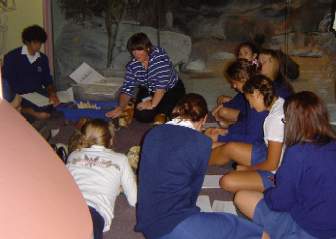
22 mai 2004 : Musée d'Australie
Yesterday I visited the Musée d'Australie in Sydney, mainly to see their Pistes à travers le temps exhibit on human evolution. It's a large and mostly up-to-date exhibit with lots of good material in it, including a large diorama of an A. afarensis family. Hello to the class from Port Hacking High School who were there on an excursion! Students were busily handling casts of skulls, comparing brain sizes, dentitions and facial angles, and using the exhibit material to research the questions in their activity sheets. Even better, they seemed to be finding it interesting. It's hard to imagine a better antidote to creationism.7 mai 2004 : Revue dans Science
This website received a glowing review from the NetWatch column in the April 30th issue of Science, probably the world's 2nd-most influential scientific journal. You can read the Science column in either HTML or PDF format (the pdf looks much better).29 avril 2004 : Le singe tondu riposte
The Washington Dispatch website has a new article, Prier à l'autel (sic) du singe tondu, which makes some real howlers about human evolution - obviously copied straight from creationist literature. I've written a short response, which is entry no. 4 by 'habilis' sur cette page. (links are now obsolete)21 avril 2004 : Regroupement des espèces
An interesting new paper by Katerina Harvati and colleagues in the Proceedings of the National Academy of Sciences (Feb 2004, 101:1147) compares the amount of difference between Neandertals and modern humans with the amount of difference typically found between different primate species. Their results strongly supported the conclusion that Neandertals should be considered a different species from modern humans. This reminds me of an influential paper published by Ian Tattersall in the Journal of Human Evolution in 1986 (JHE 15:165-175). Tattersall pointed out that closely related species in the primates generally differ in only a few characteristics, and sometimes none which would be detectable in the fossil record. In the hominids, by contrast, fossils are routinely lumped into the same species even when they contain far greater differences than are normally found between closely related primate species. For example, modern Homo sapiens is already a highly variable species, but often has specimens such as Kabwe, Arago and Petralona lumped into it even though they are well outside the range of modern H. sapiens. Sometimes these are classified as 'archaic' H. sapiens, a tactic not used with any other species. Tattersall argued persuasively that in any group other than the hominids, these differences would automatically result in the naming of new species, and that we should not treat humans differently. The Harvati et al. paper supports Tattersall's argument that we should be recognizing more species in the hominid fossil record.31 mars 2004 : Le doigt du panda
For those interested in evolution, creationism and the 'intelligent design' controversy, there's a new blog which is essential reading. Le Doigt du Panda is a group blog, whose participants include many scientists who are active in the fight against creationism. This blog only started a couple of weeks ago, but it already contains many excellent articles.
21 février 2004 : Crâne de Ceprano
The Ceprano skull from Italy is considered between 700,000 and 900,000 years old, and is often attributed to H. erectus. Mallegni et al. (C. R. Palevol 2, 153-159) have used the Ceprano skull as the type specimen for a newly-named species, Homo cepranensis. However, I think that H. cepranensis will struggle to be generally accepted as a valid species, and at least one article has already appeared disputing its validity. (Gilbert et al., JHE 45:255-259, 2003)27 décembre 2003 : Art néandertalien
A recently-found rock was apparently modified by Neandertals to resemble a face. It doesn't look all that impressive, but the evidence seems strong that it was intentionally modified, and is not just an odd-shaped rock. This makes it important evidence for artistic behaviour in Neandertals. (See Visage de Néandertal trouvé dans la Loire, from the BBC)27 octobre 2003 : Nouveau article sur Dmanisi
The November issue of Scientific American contains a short article about the Dmanisi hominids called Un étranger dans un nouveau pays, by Kate Wong. Suivez ce lien for a page on this site about these fossils, which have an intruiging mixture of Homo erectus and Homo habilis features.23 octobre 2003 : article de McClellan
Bill McClennan wrote an amusing article yesterday for the St. Louis Post-Dispatch, touching on paleoanthropology, human evolution, and creationism: Hommes, femmes, Irak, créationnisme et tout ce lourd matériel21 septembre 2003 : Les sept filles d'Eve
 ADN mitochondrial (mtDNA) has become very
relevant to paleoanthropology since
the first Neandertal mtDNA sequence was discovered in 1997. Bryan Sykes' book
Les sept filles d'Eve is an excellent book for popular audiences
which explains the science behind mtDNA and why it is so useful for investigating
population histories. It also provides a good look at the way science is conducted,
the conflicts and rivalries that occur, and contains diversions into
fascinating topics such as the Iceman, golden hamsters, and the disappearance of
the Russian royal family including Princess Anastasia. The book is somewhat Eurocentric,
since most of Sykes' data (and the 'seven daughters') come from Europe, but a
section at the back of the book discusses some of what is known about the
worldwide distributions of mtDNA sequences.
ADN mitochondrial (mtDNA) has become very
relevant to paleoanthropology since
the first Neandertal mtDNA sequence was discovered in 1997. Bryan Sykes' book
Les sept filles d'Eve is an excellent book for popular audiences
which explains the science behind mtDNA and why it is so useful for investigating
population histories. It also provides a good look at the way science is conducted,
the conflicts and rivalries that occur, and contains diversions into
fascinating topics such as the Iceman, golden hamsters, and the disappearance of
the Russian royal family including Princess Anastasia. The book is somewhat Eurocentric,
since most of Sykes' data (and the 'seven daughters') come from Europe, but a
section at the back of the book discusses some of what is known about the
worldwide distributions of mtDNA sequences.
4 septembre 2003 : la trilogie Neanderthal Parallax
Hominidés, the first book in Robert Sawyer's Parallaxe Néandertalienne trilogy, has just won the Hugo Award for best science-fiction novel of the year. The books involve contact with a parallel earth in which only Neandertals survived to the present day, and have developed a civilisation with considerable differences from our own. The second book in the series is Humains, and the third, Hybrides, is to be published in September 2003.22 août 2003 : édition spéciale de Scientific American
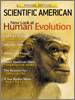 Scientific American has released a new special edition issue devoted to paleoanthropology:
Nouveau regard sur l'évolution humaine. It contains a number of updated reprints of article about human evolution that have appeared in Scientific American over the last decade or so. The articles cover topics such as the Out of Africa and Multiregional models of human evolution, recent fossil discoveries such as Sahelanthropus and Orrorin, neandertals, mtDNA, cannibalism, and the evolution of bipedality and skin color.
Scientific American has released a new special edition issue devoted to paleoanthropology:
Nouveau regard sur l'évolution humaine. It contains a number of updated reprints of article about human evolution that have appeared in Scientific American over the last decade or so. The articles cover topics such as the Out of Africa and Multiregional models of human evolution, recent fossil discoveries such as Sahelanthropus and Orrorin, neandertals, mtDNA, cannibalism, and the evolution of bipedality and skin color.
9 août 2003 : Un nouveau crâne du Kenya
Trois crânes fossiles découverts à Dmanisi en Géorgie, in the ex-USSR, between 1999 and 2001 were a big surprise to the paleoanthropological community. Not only were they the oldest and most primitive hominid skulls ever found outside of Africa, in both brain size and anatomy they seemed intermediate between Homo habilis and Homo erectus fossils, and their finders classified them as a new species, Homo georgicus.Maintenant, une crâne similaire a apparemment été découvert en Afrique par l'équipe de Meave Leakey. Ce nouveau crâne, âgé de 1,55 million d'années, a été trouvé au Kenya en 2000 et annoncé lors de la réunion d'avril 2003 de l'American Association of Physical Anthropologists. (Science, 300:893, 9 mai 2003) Le même rapport a également noté que de nombreux scientifiques présents à la réunion étaient sceptiques quant à la validité de Homo georgicus en tant qu'espèce distincte. L'expert de H. erectus, Philip Rightmire, est cité comme croyant que les crânes de Dmanisi sont des erectus. Enfin, un quatrième et plus robuste crâne, ainsi que certains ossements squelettiques, ont été découverts à Dmanisi.
28 juillet 2003 : Kenyanthropus platyops
Tim White argues in a recent paper (Hominidés précoces - diversité ou distorsion ? Science 299:1994, March 28 2003) that maybe too many new fossil hominid species are being named. He lists 4 recently-named species as examples. Curiously, two of these are ones for which he was a coauthor. However, he takes particular aim at Kenyanthropus platyops, named in 2001 from a fossil skull found by Meave Leakey's team. White argues that it is so severely distorted that it cannot be confidently identified, and may just be a Kenyan variant of Australopithecus afarensis. White is, by all accounts, both widely recognized as a superb anatomist and feared for the sharpness of both his pen and his tongue. To see why, read this paper (Une perspective sur la science : l'anthropologie physique au millénaire, American Journal of Physical Anthropology 2000), which contains scathing verdicts on many claims from other scientists.22 juillet 2003 : Les Néandertaliens de Shanidar
Good news: the Shanidar Neandertal fossils from the Iraqi National Museum have been discovered safe and sound. Voir ci-dessous for more details.17 juin 2003 : Marcher avec des hommes de grotte
The new BBC series Walking with Cavemen is now being shown in the U.S. and Australia. Unlike the Walking with Dinosaurs and Walking with Beasts series which used computer-generated animals, Cavemen uses humans in makeup and costumes to represent other hominids. It's well done, though hominids just don't have the 'oomph' of dinosaurs.La BBC a reçu beaucoup de critiques pour Dinosaurs en présentant des spéculations comme des faits, et a donc essayé de faire mieux avec Cavemen. Cependant, le premier épisode présente longuement l'idée que l'origine de la bipédie est due à son efficacité énergétique accrue. Cela est présenté comme une quasi-certitude, mais en réalité, l'origine de la bipédie est un sujet controversé, avec de nombreuses hypothèses différentes en circulation et aucun consensus clair. Et dans le deuxième épisode, il est affirmé que H. habilis est un ancêtre humain, et il est sous-entendu que H. rudolfensis a disparu. C'est une opinion commune, mais ce n'est pas quelque chose dont nous pouvons être certains. C'est une question de préférence, mais j'aurais préféré un spectacle qui donnait plus d'explications sur les preuves derrière les spéculations, et qui ne passait pas sous silence les incertitudes.
Dernière minute : comme prévu, Answers in Genesis a rapidement publié une réponse, Walking with Cavemen - fait ou fiction ?. Ils mettent naturellement l'accent sur la quantité de spéculation que la série développe. Cependant, ce sont les preuves fossiles qu'ils devraient être plus préoccupés par, car les preuves constituent un gros, gros problème pour le créationnisme.
31 mai 2003 : Déchaîner la tempête
In January 2003, Answers in Genesis (AIG) web-published Déchaîner la tempête, a highly critical review of Décrypter les mystères de la création, a new creationist book by Dennis Petersen. AIG rightly slams Petersen on many counts: sloppy reasoning, ignorance of the theory of evolution, irrelevant material, and the credulous use of many hoary creationist arguments which have long been discredited, even by many creationists. Examples include the moon dust argument, the shrinking sun, the Archaeopteryx fraud claim, the 'Japanese plesiosaur', the Paluxy River tracks, etc. Many of these arguments are listed on an AIG web page, Arguments que nous pensons que les créationnistes ne devraient PAS utiliser.Ce que je trouve amusant, cependant, c'est que le niveau d'incompétence de Petersen rappelle à peu près toute la littérature créationniste que j'ai jamais lue, datant des années 1970 et 1980, y compris des matériaux provenant de AIG (alors appelée Creation Science Foundation) et de l'Institute for Creation Research (ICR). À l'époque, il semblait difficile de trouver un créationniste qui *n'*utilisait *pas* les arguments du soleil rétrécissant, du plesiosaure ou de la poussière lunaire. Brian Baxter, dans un article paru dans le numéro d'automne 2003 de the skeptic (le magazine des Australian Skeptics), fait un point similaire, montrant que beaucoup des arguments actuellement abandonnés par AIG y étaient utilisés avec enthousiasme au début des années 1980. AIG explique ce retournement en disant que :
Toutes les théories scientifiques sont sujettes à l'erreur, et de nouvelles données renversent souvent les théories précédemment admises. Les évolutionnistes révisent continuellement leurs théories en raison de nouvelles données, il ne devrait donc pas surprendre ni affliger que certaines théories scientifiques créationnistes aient également besoin d'être révisées.but, in fact, most of these popular creationist arguments were incompetent from the day they were first made, and anticreationists were soon rebutting them, by doing the basic research that creationists had failed to do. It took a couple of decades of creationists being bludgeoned with the evidence of their incompetence before AIG obviously decided that they had to make a serious attempt to try and stamp out some of the more embarrassing creationist bloopers (for which they do deserve some credit). AIG has clearly had enough of having their fingers burnt by dodgy creationist arguments (see La citation sur les singes for a spectacular example). Nowadays one can see that they are making a effort to improve their game - gone are the days of obvious misquotations and misrepresentations, basic scientific errors, uncritical acceptance of claims from other creationists, failure to check original sources, etc. In a big slam at the old ICR-style of creationism, AIG even says, in a letter quoted in their Unleashing the Storm article:
Je recommande vivement, si vous envisagez une telle refonte majeure, de vous familiariser vraiment, dans le détail, avec toute la littérature créationniste moderne, et non seulement avec les vieux documents de l'ICR (bien que nous tous chérissions leurs efforts pionniers) recyclés.Take that, ICR! AIG clearly considers itself the new leader of the creationist movement, and they are right. Under the leadership of John Morris (son of ICR founder Henry Morris who was responsible for much of "the old ICR stuff") ICR has become increasingly stagnant while AIG has leapt ahead of it in visibility and clout.
12 mai 2003 : Eugène Dubois
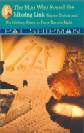 I've just read a new (well, 2001) biography of Eugène Dubois, the discoverer of Homme de Java, by the excellent science writer Pat Shipman. Shipman had unprecedented access to the Dubois archives and other material, so her book, L'homme qui a trouvé le maillon manquant, is surely the most detailed treatment of Dubois yet written. My only complaint would be that Shipman has used artistic licence to fill in many details of Dubois' life, and one is never quite sure where the boundary lies between documentable truth and fiction. Notwithstanding that, I thoroughly recommend the book. It illuminated the magnitude of Dubois' achievement, and his (often unattractive) personality, better than anything else I have ever read.
18 avril 2003 : Les Néandertaliens de Shanidar au musée irakien
12 juin: Based on widespread news reports, I had previously mourned the loss of virtually the entire collection of the Iraqi National Museum, which contained one of the world's greatest collections of material from the earliest civilizations. It now appears that much of the museum's collection has survived (see articles from The Washington Post, 8 juin, 9 juin, 11 juin). Irked though I am at having been mistaken, this is far outweighed by my pleasure at knowing that this priceless collection has been preserved.21 juin: Plus d'actualités from the Washington Post: the estimate of losses is increasing again, to over 6000.
12 juillet: I initially wrote this item because les spécimens de Néandertal de Shanidar came from the Iraqi Museum. The July 2003 issue of National Geographic lists the Shanidar fossils among a list of the more important items from the Baghdad museum which are unaccounted for. However, une page de mise à jour sur leur site web says that the Shanidar specimens have since been found to be safely preserved.
28 mars 2003 : OH 65
 The latest fossil from Olduvai Gorge, OH 65, is a fossil upper jaw
with part of the lower face. It was discovered in 1995, but was not
made public until 2003 (Blumenschine et al. 2003, Science 299:1217-21
with a commentary by Phillip Tobias in the same issue). Based on its
similarities with both OH 7 (the type specimen of H. habilis) and
ER 1470, Blumenschine and his colleagues
suggest that 1470 is therefore a member of habilis, making rudolfensis
an invalid species.
The latest fossil from Olduvai Gorge, OH 65, is a fossil upper jaw
with part of the lower face. It was discovered in 1995, but was not
made public until 2003 (Blumenschine et al. 2003, Science 299:1217-21
with a commentary by Phillip Tobias in the same issue). Based on its
similarities with both OH 7 (the type specimen of H. habilis) and
ER 1470, Blumenschine and his colleagues
suggest that 1470 is therefore a member of habilis, making rudolfensis
an invalid species.
Bien entendu, rien n'est jamais aussi simple en paléoanthropologie. Un autre scientifique que j'ai interrogé a estimé que OH 65 différait à la fois de OH 7 et d'une autre paire de fossiles qui pourraient être des mâchoires de rudolfensis. L'anatomiste Bernard Wood, un principal défenseur du rudolfensis au cours de la dernière décennie, est un autre scientifique peu susceptible d'accepter la disparition de cette espèce. La conclusion de Blumenschine et de ses collègues ne sera donc certainement pas incontestée.
L'article de commentaire de Tobias note que le nombre d'espèces de hominidés et même de genres a pris un essor ces dernières années. J'avais moi-même remarqué ce phénomène : depuis 1994, nous avons assisté à la nomenclature de A. anamensis, Ar. ramidus, A. garhi, A. bahrelghazali, K. platyops, O. tugenensis, S. tchadensis et H. antecessor. Il s'agit de 8 nouvelles espèces et de 4 nouveaux genres en moins d'une décennie.
Une explosion similaire d'espèces et de genres s'est produite dans la première moitié du 20e siècle. Les scientifiques et les découvreurs de fossiles ont joyeusement créé de nouveaux noms pour presque chaque fossile significatif qui a été trouvé. Cette vague de nommages avait très peu à voir avec la réalité biologique (la plupart des spécimens n'étaient pas très différents des espèces existantes), et probablement beaucoup à voir avec l'égoïsme et le désir de laisser sa marque dans la science. Heureusement, la plupart de ces noms ont été éliminés lors d'une grande rationalisation dans les années 1950, ne laissant qu'une poignée de taxons généralement acceptés.
Il ne serait pas surprenant que certaines des nouvelles espèces nommées au cours de la dernière décennie aient également échoué à passer l'épreuve du temps. Cependant, beaucoup d'entre elles pourraient survivre - l'augmentation récente du nombre d'espèces nommées pourrait bien être un phénomène réel, causée par le fait que plus de personnes recherchent des fossiles d'hominidés dans plus d'endroits qu'auparavant.
Cette page fait partie de la FAQ sur les hominidés fossiles de l'Archive TalkOrigins.
Page d'accueil |
Espèces |
Fossiles |
Créationnisme |
Lecture |
Références
Illustrations |
Nouveautés |
Retour d'information |
Recherche |
Liens |
Fiction
http://www.talkorigins.org/faqs/homs/blog.html, 31/05/2011
Copyright © Jim Foley
|| Envoyez-moi un email 